9/27/06
In the Christmas season of 1999 I watched a made for TV movie called The Three Kings, which my mother had taped off of ABC in 1987. My first memory of the cult 80's program Sledge Hammer, comes from this tape on which I found a promo for the series featuring a talking gun. Now that instantly made me curious about the show, 'what kind of program was this?' I wonderd. Years later I saw the first season of Sledge Hammer for sale at a local Boarders, and in conversation later learned that the show was a favorite of a friend of mines while growing up. Anyway about a year and a half ago I net flixed the first season, and got a chance to introduce the program to a number of friends of mine. Only now though, have I finally gotten around to the 2nd season of this comedy series, which was inspiried by the early cop films of Clint Eastwood.
Sledge Hammer was the creation of studio wonderkid Alan Spencer, whose later series The Nut House I do kind of remember. Sledge Hammer was orignally intended to be a feature film, but ended up in a weekly half hour formate. The series stars David Rasche as over the top cop Sledge Hammer, and one time Mrs. Micheal Crichton, Anne-Marie Martin, as his decidely more compatent partner Dori Doreau. Harrison Page played their often exasperated boss Captian Trunk. In its first season the show came across as mostly a satire of popular movies, TV shows, and genra conventions, but by season two had really established its own identity as both comedy and character piece. Season two production values give testment to the shows slashed budget, but the writers and production crew made do as best they could. While season one was funnyer, season two is satisfying in its own way, and I think more so if you've seen season one. If you get or rent either season, be sure to listen to all of creator Alan Spencers audio commentarys, he excels at them. Also check out the title sequence to get a sense of the series.
Monday, July 2, 2007

The Trouble with Harry (1955)
9/24/06
While dark comedy is a part of every Hitchcock movie, it is seldom its focus, in fact only twice in his career did the great director set out to make a comedy picture, the first was Mr. & Mrs. Smith in 1941, the second and better known was The Trouble with Harry in 1955. Harry is a kind of screwball comedy about death with British sensabilites. Set in rural Vermont, the movie concerns a number of people who come across the recently deceased body of a man, most of these characters come to think that they were somehow responsable for the persons passing. For example retired Captian Albert Wiles (a beardless Edmund Gwenn) thinks he shot the man while hunting rabbits, while Miss Ivy Gravely (Mildred Natwick) thinks she killed him with the heal of one of her hiking boats, after the disoriented man attacked her in the woods.
While the mystery of what caused the death of the films star corpse (played by actor Philip Truex, who ironicaly at the time of this writing is still alive and 95 years old) must be maintained throughout most of the movie, his identity is quickly reveled. The body is that of Harry Worp, estranged husband of the towns new arriaval Jennifer Rogers (Shirley MacLaine in her film debut). Jennifer is only to glade to have her husband dead, who as a we learn later in the film was the brother of her late first husband, who had fatherd her 5 year old son Arnie (Leave it to Beavers Jerry Mathers). Eventully struggling artist Sam Marlowe (John Forsythe) gets involved, both to romance the widow Rogers and help bury Harry, several times.
Far from typical Hitchcock Harry is a likable novelty, that boasts Bernard Herrmanns first score for the master of suspense. Something I particulary noticed in this, my second viewing of the film (I saw it first in 1999 I belive), was the unusal cutting. On multiple occasions during the course of the film a complet fad to black is made, only to fad back in on the same characters in the same place a short time later. Quite litearly Hitch was 'cuting the boaring parts' out of the lives of these characters, and keeping the action of the film (which take place over the course of roughly 24 hours) at lesuraly but attention maintaining pace. But to me the best part of this film is how all the characters seem to take the events of the day with remarkable stride, it is all really quite delightfull to watch, and worth your 99 minutes.
While dark comedy is a part of every Hitchcock movie, it is seldom its focus, in fact only twice in his career did the great director set out to make a comedy picture, the first was Mr. & Mrs. Smith in 1941, the second and better known was The Trouble with Harry in 1955. Harry is a kind of screwball comedy about death with British sensabilites. Set in rural Vermont, the movie concerns a number of people who come across the recently deceased body of a man, most of these characters come to think that they were somehow responsable for the persons passing. For example retired Captian Albert Wiles (a beardless Edmund Gwenn) thinks he shot the man while hunting rabbits, while Miss Ivy Gravely (Mildred Natwick) thinks she killed him with the heal of one of her hiking boats, after the disoriented man attacked her in the woods.
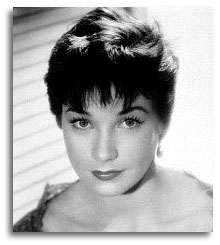
While the mystery of what caused the death of the films star corpse (played by actor Philip Truex, who ironicaly at the time of this writing is still alive and 95 years old) must be maintained throughout most of the movie, his identity is quickly reveled. The body is that of Harry Worp, estranged husband of the towns new arriaval Jennifer Rogers (Shirley MacLaine in her film debut). Jennifer is only to glade to have her husband dead, who as a we learn later in the film was the brother of her late first husband, who had fatherd her 5 year old son Arnie (Leave it to Beavers Jerry Mathers). Eventully struggling artist Sam Marlowe (John Forsythe) gets involved, both to romance the widow Rogers and help bury Harry, several times.
Far from typical Hitchcock Harry is a likable novelty, that boasts Bernard Herrmanns first score for the master of suspense. Something I particulary noticed in this, my second viewing of the film (I saw it first in 1999 I belive), was the unusal cutting. On multiple occasions during the course of the film a complet fad to black is made, only to fad back in on the same characters in the same place a short time later. Quite litearly Hitch was 'cuting the boaring parts' out of the lives of these characters, and keeping the action of the film (which take place over the course of roughly 24 hours) at lesuraly but attention maintaining pace. But to me the best part of this film is how all the characters seem to take the events of the day with remarkable stride, it is all really quite delightfull to watch, and worth your 99 minutes.
All the King's Men (2006)
9/23/06
I'm a fan of the 1949 best picture winner All the Kings Men, a film that also netted acting Oscars for Broderick Crawford and Mercedes McCambridge. So I was excitted when I heard it was to be remade, espically with Steve Zailian writing and directing. The film features an all star cast including Sean Penn in the central role of Willie Stark. While it seems to do everything fine on a technical level I was underwhelmed, I just didn't feel it. Of course the story is intended to be a downer, so maybe my mild depression upon leaving the theater proves that the movie works, but to me it lacked the mythic qualiy that really pulled the original out of the mud. It didn't seem like Stark really feel that far, which is what is suppose to make the story moving. I think if they'd set up more of a contrast between pre-and-post corruption Stark the movie would have been stronger. Also updating the film from the 30's to the 50's wasn't really necesary, I guess the power's the be just thought the later time period would be more accesable for viewers.
I'm a fan of the 1949 best picture winner All the Kings Men, a film that also netted acting Oscars for Broderick Crawford and Mercedes McCambridge. So I was excitted when I heard it was to be remade, espically with Steve Zailian writing and directing. The film features an all star cast including Sean Penn in the central role of Willie Stark. While it seems to do everything fine on a technical level I was underwhelmed, I just didn't feel it. Of course the story is intended to be a downer, so maybe my mild depression upon leaving the theater proves that the movie works, but to me it lacked the mythic qualiy that really pulled the original out of the mud. It didn't seem like Stark really feel that far, which is what is suppose to make the story moving. I think if they'd set up more of a contrast between pre-and-post corruption Stark the movie would have been stronger. Also updating the film from the 30's to the 50's wasn't really necesary, I guess the power's the be just thought the later time period would be more accesable for viewers.
Lady in the Water (2006)
9/23/06
On Thursday my evening class meet at a resturant down town, I belive it was called 'The Peir'. We held class in a basement dinning room, the whole thing was painted white, including most of the furnishings, though there was a small amount of black and blue to prevent eye strain. It was a weird place, a cross between a spread in an interior decorating magazine, and David Lynch (or possibly Stanley Kubrick). Anyway after class I went to see a movie at the cheap theater. I saw Shyamalans latest, and ultimetly weakest picture, Lady in the Water.
Inspired by an east-asain bedtime story about a sea nymph like creature called a Narf, this movie finds one (Bryce Dallas Howard) living in the pool of a Philly area apartment complex, with an important mission to accomplish. The Ho-hum first half, and indeed the whole movie is really saved by Paul Giamatti's performance as the complexes sad-eyed super. It wasn't until the 'shower translation scene' that I felt fully commited to the movie. Most similar to Signs out of any of Shyamalans work, it explores mostly familour territory. The movies message is about everyone finding there purpose in life, and here it is told through the efforts of a large group of likable, ethnicaly diverse characters, trying to do a good deed, and help the Narf get home. Simplistic maybe, but it did make me feel good. Six Feet Under's Freddy Rodriquez has a small role as a man exercising only one half of his body.
On Thursday my evening class meet at a resturant down town, I belive it was called 'The Peir'. We held class in a basement dinning room, the whole thing was painted white, including most of the furnishings, though there was a small amount of black and blue to prevent eye strain. It was a weird place, a cross between a spread in an interior decorating magazine, and David Lynch (or possibly Stanley Kubrick). Anyway after class I went to see a movie at the cheap theater. I saw Shyamalans latest, and ultimetly weakest picture, Lady in the Water.
Inspired by an east-asain bedtime story about a sea nymph like creature called a Narf, this movie finds one (Bryce Dallas Howard) living in the pool of a Philly area apartment complex, with an important mission to accomplish. The Ho-hum first half, and indeed the whole movie is really saved by Paul Giamatti's performance as the complexes sad-eyed super. It wasn't until the 'shower translation scene' that I felt fully commited to the movie. Most similar to Signs out of any of Shyamalans work, it explores mostly familour territory. The movies message is about everyone finding there purpose in life, and here it is told through the efforts of a large group of likable, ethnicaly diverse characters, trying to do a good deed, and help the Narf get home. Simplistic maybe, but it did make me feel good. Six Feet Under's Freddy Rodriquez has a small role as a man exercising only one half of his body.
The Court Martial of Billy Mitchell (1955)
9/22/06
The same year that Preminger released his black and white, minimal set, anti-drug piece The Man With The Golden Arm, he directed a Warner-Color Cinemascope historical drama titled The Court Martial of Billy Mitchell. The film is a straight forward rendition of the court-martial trial of Army Colonel William Mitchell in relationship to his statements to the press that the U.S. military was being neglegent in its mishandeling of its air forces. The part of Mitchell is pefect for Gary Cooper, truely one of those quite men of integrety he loved playing. Cooper is helped out in the court room by Hollywood nice-guy Ralph Bellamy as Congressman and defense council Frank R. Reid.
Many of Mitchell's claims about the dangers this country could face from air assult doubtless seemed kind of crazy to many in 1925, the year his court-martial trial was held. Yet Mitchell, much like his contempory Alexander P. de Seversky, had a prophetic sense of what was to come in the field of air power. In fact the most erie scene in the movie is when Mitchell points out how suseptable Pearl Harbor would be to air attack, and even goes so far as to predict that the Japanse would eventully cary out such an attack, 16 years befor December 7th 1941, and two years befor Lindbergh even flew the Atlantic. The film also features Charles Bickford and Rod Steiger as figures opposed to Mitchell, and Darren McGavin and Elizabeth Montgomery (in her film debut) as two of his allies.
The same year that Preminger released his black and white, minimal set, anti-drug piece The Man With The Golden Arm, he directed a Warner-Color Cinemascope historical drama titled The Court Martial of Billy Mitchell. The film is a straight forward rendition of the court-martial trial of Army Colonel William Mitchell in relationship to his statements to the press that the U.S. military was being neglegent in its mishandeling of its air forces. The part of Mitchell is pefect for Gary Cooper, truely one of those quite men of integrety he loved playing. Cooper is helped out in the court room by Hollywood nice-guy Ralph Bellamy as Congressman and defense council Frank R. Reid.
Many of Mitchell's claims about the dangers this country could face from air assult doubtless seemed kind of crazy to many in 1925, the year his court-martial trial was held. Yet Mitchell, much like his contempory Alexander P. de Seversky, had a prophetic sense of what was to come in the field of air power. In fact the most erie scene in the movie is when Mitchell points out how suseptable Pearl Harbor would be to air attack, and even goes so far as to predict that the Japanse would eventully cary out such an attack, 16 years befor December 7th 1941, and two years befor Lindbergh even flew the Atlantic. The film also features Charles Bickford and Rod Steiger as figures opposed to Mitchell, and Darren McGavin and Elizabeth Montgomery (in her film debut) as two of his allies.
West Wing: Season 2 (2000-2001)
9/12/06
West Wing: Season 2: Finished the second season of one of my all time favorite shows. Because of my mission I was not able to get into this series until mid-way through season 3, so I've been doing some catching up over the past few years. What else can I say about the program other then its just increadably written and acted. Season 2 was Emily Procters year on the show, as well as the year that Bartlet reveled his MS to the public.
West Wing: Season 2: Finished the second season of one of my all time favorite shows. Because of my mission I was not able to get into this series until mid-way through season 3, so I've been doing some catching up over the past few years. What else can I say about the program other then its just increadably written and acted. Season 2 was Emily Procters year on the show, as well as the year that Bartlet reveled his MS to the public.
The Second Civil War (1997)
9/12/06
The Second Civil War: I had wanted to see this HBO produced satire since I first heard about it, shortly before its television debut in 1997. The plot concerns an Idaho governor (Emmy winner Beau Bridges) who closes his states border after the nation is inendated with refuges from various crises across the globe. Phil Hartman is the indecisive President who lets the crises get out of control, perpetuating the nations slide into a second civil war (hence the title). The film boasts a cast of noteables including James Earl Jones, James Coburn and Denis Leary. While not succesfull on a number of levels, this movie does succeed (as well as seced) in making the viewer more then a little peved about the devisive tendences present in America today. I would however have a hard time recomending this film, though it is better then its cinematic cousin Canadian Bacon.
The Second Civil War: I had wanted to see this HBO produced satire since I first heard about it, shortly before its television debut in 1997. The plot concerns an Idaho governor (Emmy winner Beau Bridges) who closes his states border after the nation is inendated with refuges from various crises across the globe. Phil Hartman is the indecisive President who lets the crises get out of control, perpetuating the nations slide into a second civil war (hence the title). The film boasts a cast of noteables including James Earl Jones, James Coburn and Denis Leary. While not succesfull on a number of levels, this movie does succeed (as well as seced) in making the viewer more then a little peved about the devisive tendences present in America today. I would however have a hard time recomending this film, though it is better then its cinematic cousin Canadian Bacon.
Subscribe to:
Posts (Atom)