8/30/06
I also watched director Jean-Jacques Annaud's 1988 film, The Bear. I could never sit through this whole movie as a kid, but as an adult I found it had a simplicity and near-Disney quality about it that I liked. However due to its slow pace and minimal story, I doubt that I ever watch it again.
Saturday, June 30, 2007

Grizzly Man (2005)
8/30/06
I first became aware of the story of Timothy Treadwell from a magazine artical published shortly after his death. Treadwell was a one-time aspiring actor/hippie- type and recovering drug and alcohol addict, who found a sort of salvation among the gizzly bears of southern Alaska. For thirteen summers Treadwell traveld from his home in California to Alaska to live with, and in his mind protect, the gizzly bears living on a federal reserve there. Most of these ventures he did on behalf of an orginization he helped create called Grizzly People, Treadwell would take his video camra with him and document his 'expeditions', then tour public schools back in California educating children about the bears. In 2003 Treadwell and his girlfriend were killed by a grizzly, and in 2005 German filmmaker Werner Herzog assembled selections from Timothy's 100+ hours of video, interspersed them with interviews of those who know him, and created the award winning documentary Grizzly Man. I just can't do justice to Treadwells story, he's a strange character worth spending the films hour and fourty-five minute running time with. Though Bears are the main animal attraction of the film, I preferd the time spent with the foxes.
I first became aware of the story of Timothy Treadwell from a magazine artical published shortly after his death. Treadwell was a one-time aspiring actor/hippie- type and recovering drug and alcohol addict, who found a sort of salvation among the gizzly bears of southern Alaska. For thirteen summers Treadwell traveld from his home in California to Alaska to live with, and in his mind protect, the gizzly bears living on a federal reserve there. Most of these ventures he did on behalf of an orginization he helped create called Grizzly People, Treadwell would take his video camra with him and document his 'expeditions', then tour public schools back in California educating children about the bears. In 2003 Treadwell and his girlfriend were killed by a grizzly, and in 2005 German filmmaker Werner Herzog assembled selections from Timothy's 100+ hours of video, interspersed them with interviews of those who know him, and created the award winning documentary Grizzly Man. I just can't do justice to Treadwells story, he's a strange character worth spending the films hour and fourty-five minute running time with. Though Bears are the main animal attraction of the film, I preferd the time spent with the foxes.
The God Who Wasn't There (2005)
8/27/06
The 2005 documentary (or perhaps more accuretly 'film essay') The God Who Wasn't There, is a 62 minute critical examination of various Christian claims by ex-fundamentalist (and chronicaler of independent film) Brian Flemming. While Flemming keeps a calm objectivist voice through most (but not all) of the film, he is clearly angery over a sense of 1) being misslead since childhood about Christianity, and 2) the evident mental distress that apperently hit him particulary hard from such teaching (a childhood fear that he was going to Hell). Flemming gets a chance to confront/vent to a figure who symbolizes those Christian forces of his childhood, this comes in the form of Dr. Ronald G. Siples, the director of the Village Christen Schools of Sun Valley California which he once attended. Siples clearly misunderstood the intent of this schedualed interview with one of his schools alumni, and after probably about 10 minutes walked out on him. That event evoked the famed Moore/Heston confrontation of Bowling for Columbine, especially given that Flemming spends the first 9/10's of his doc challenging the conventional wisdom, so that when his eventual target reiterates that CW he would look like a fool, though in the end Sipus handeld the situation fairly well.
This brings me to what Flemming actually says in the film. The directors main argument, and one you don't hear too often in American religous discourse, is that Jesus was a fictional character, an example of the mythical hero arch-type retroactively inserted into history by the writers of the Christian Gospels around 70 A.D. (or in this case I'd guess it would be C.E.). There are other relatively less controversal claims and arguments given in the film, and Flemming makes them quite well and simply with the aid of an assembly of experts, including Berkely Folkloreist Dr. Alan Dundes (who passed away shortly before the release of this film) and 'The End of Faith' author Sam Harris.
One of Flemmings big concerns is that most Christians know little or nothing about the early history of their movment, or how its foundational texts can be considerd examples of symbolic literature and parallel the mythic tales of other traditions. As a decently educated Latter-day Saint I must say I felt more preparied and less shocked by some of the information presented in the film then I'm sure many other Christians did (assuming some other Christians actully saw this film), I felt much the same way about The Da Vinci Code. There are Mormon compatable explainations or answers to many, but not all, of the issues Flemming raises in the film. I think the most difficult argument for me was his dismissal of 'moderate Christianity' (a catagory I consider myself to fall under) as making no sense. I reject the filmmakers contention that one must either take the whole Bible litearly or reject it as 'untrue', however as one who is navigating a spiritual course that has lead away in some instances from what I will call a 'face value' reading of scripture, I recognize a number of what can be called illogical leaps I've had to make, that can and perhaps should be open to criticism. The God Who Wasn't There dosen't want to let you off easy, unless maybe your an atheist.
Here is a link to a review of the film by Infidelis Maximus.
The 2005 documentary (or perhaps more accuretly 'film essay') The God Who Wasn't There, is a 62 minute critical examination of various Christian claims by ex-fundamentalist (and chronicaler of independent film) Brian Flemming. While Flemming keeps a calm objectivist voice through most (but not all) of the film, he is clearly angery over a sense of 1) being misslead since childhood about Christianity, and 2) the evident mental distress that apperently hit him particulary hard from such teaching (a childhood fear that he was going to Hell). Flemming gets a chance to confront/vent to a figure who symbolizes those Christian forces of his childhood, this comes in the form of Dr. Ronald G. Siples, the director of the Village Christen Schools of Sun Valley California which he once attended. Siples clearly misunderstood the intent of this schedualed interview with one of his schools alumni, and after probably about 10 minutes walked out on him. That event evoked the famed Moore/Heston confrontation of Bowling for Columbine, especially given that Flemming spends the first 9/10's of his doc challenging the conventional wisdom, so that when his eventual target reiterates that CW he would look like a fool, though in the end Sipus handeld the situation fairly well.
This brings me to what Flemming actually says in the film. The directors main argument, and one you don't hear too often in American religous discourse, is that Jesus was a fictional character, an example of the mythical hero arch-type retroactively inserted into history by the writers of the Christian Gospels around 70 A.D. (or in this case I'd guess it would be C.E.). There are other relatively less controversal claims and arguments given in the film, and Flemming makes them quite well and simply with the aid of an assembly of experts, including Berkely Folkloreist Dr. Alan Dundes (who passed away shortly before the release of this film) and 'The End of Faith' author Sam Harris.
One of Flemmings big concerns is that most Christians know little or nothing about the early history of their movment, or how its foundational texts can be considerd examples of symbolic literature and parallel the mythic tales of other traditions. As a decently educated Latter-day Saint I must say I felt more preparied and less shocked by some of the information presented in the film then I'm sure many other Christians did (assuming some other Christians actully saw this film), I felt much the same way about The Da Vinci Code. There are Mormon compatable explainations or answers to many, but not all, of the issues Flemming raises in the film. I think the most difficult argument for me was his dismissal of 'moderate Christianity' (a catagory I consider myself to fall under) as making no sense. I reject the filmmakers contention that one must either take the whole Bible litearly or reject it as 'untrue', however as one who is navigating a spiritual course that has lead away in some instances from what I will call a 'face value' reading of scripture, I recognize a number of what can be called illogical leaps I've had to make, that can and perhaps should be open to criticism. The God Who Wasn't There dosen't want to let you off easy, unless maybe your an atheist.
Here is a link to a review of the film by Infidelis Maximus.
Beyound The Rocks (1922)
8/23/06
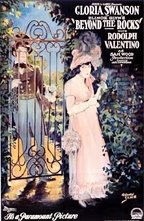
One of the most significant film finds of recent years, has been the discovery of a roughly 99% useable copy of the 1922 silent film Beyound The Rocks. Discoverd by the Neatherlands Film Museum among the property of a late and eccentric collecter named Mr. Joop, the film was directed by Sam Wood and boasts the only on screen teaming of two of the biggest movie stars of the 1920's, Gloria Swanson and Rudolph Valentino. Now released on DVD, with an introduction from the venerable Martin Scorsese (who may have been reading from a tele-prompter), the long lost film is now available to the masses (who probably don't care much). The films story itself concerns a love triangle between Valentino, Swanson, and the latters much older husband, played by Robert Bolder. A standard melodrama for the period that takes on new life given the fate of its stars, and composer Henny Vrientens energizing score. The DVD also contains documentaries on the recovery and restoration of the film, as well as some truly enjoyable audio recordings Swanson made in preperation for writing her autobiography. Also included is another Valentino film The Delicious Little Devil, in the which the latin lover plays second fiddle to now forgotten silent star Mae Murray, I found this movie to be more enjoyable then the the DVD's title attraction.
One of the most significant film finds of recent years, has been the discovery of a roughly 99% useable copy of the 1922 silent film Beyound The Rocks. Discoverd by the Neatherlands Film Museum among the property of a late and eccentric collecter named Mr. Joop, the film was directed by Sam Wood and boasts the only on screen teaming of two of the biggest movie stars of the 1920's, Gloria Swanson and Rudolph Valentino. Now released on DVD, with an introduction from the venerable Martin Scorsese (who may have been reading from a tele-prompter), the long lost film is now available to the masses (who probably don't care much). The films story itself concerns a love triangle between Valentino, Swanson, and the latters much older husband, played by Robert Bolder. A standard melodrama for the period that takes on new life given the fate of its stars, and composer Henny Vrientens energizing score. The DVD also contains documentaries on the recovery and restoration of the film, as well as some truly enjoyable audio recordings Swanson made in preperation for writing her autobiography. Also included is another Valentino film The Delicious Little Devil, in the which the latin lover plays second fiddle to now forgotten silent star Mae Murray, I found this movie to be more enjoyable then the the DVD's title attraction.
The Producers (2005)
8/17/06
Well I'm back from vacation and tonight I watched the 2005 musical The Producers. The movie is the film adaptation of the popular 2001 musical, which was itself based on Mel Brooks 'riskey'1968 film of that title, staring Gene Wilder and Zero Mostel. This film version has Nathan Lane and Matthew Broderick reprising their Broadway roles of Max Bialystock and Leo Bloom respectively. The movie is of course about an acountiant and a has-been theatrical producer who team up to put on a fawning musical about Adolph Hitler, with plans to keep the extra money raised for the 'sure to be a flop' show and flee to Brazil. The movie lacks that 'what the!?' quality that the orignal had, and further demonstrates how contemporary musical comedy comes across quite awkward on screen. However Lane and Broderick have good chemistry together, and the story departures taken from the original film, mainly in its 2nd half, make's it less static for fans of the 1968 version. In sum a middeling to lesser motion picture, if you do watch stay through the credits for Will Ferrell's romantized rendition of 'Guten Tag Klap Klap'. Also staring Uma Thurman.
Well I'm back from vacation and tonight I watched the 2005 musical The Producers. The movie is the film adaptation of the popular 2001 musical, which was itself based on Mel Brooks 'riskey'1968 film of that title, staring Gene Wilder and Zero Mostel. This film version has Nathan Lane and Matthew Broderick reprising their Broadway roles of Max Bialystock and Leo Bloom respectively. The movie is of course about an acountiant and a has-been theatrical producer who team up to put on a fawning musical about Adolph Hitler, with plans to keep the extra money raised for the 'sure to be a flop' show and flee to Brazil. The movie lacks that 'what the!?' quality that the orignal had, and further demonstrates how contemporary musical comedy comes across quite awkward on screen. However Lane and Broderick have good chemistry together, and the story departures taken from the original film, mainly in its 2nd half, make's it less static for fans of the 1968 version. In sum a middeling to lesser motion picture, if you do watch stay through the credits for Will Ferrell's romantized rendition of 'Guten Tag Klap Klap'. Also staring Uma Thurman.
Unfaithfully Yours (1948)
8/12/06
Unfaithfully Yours is a later and lesser entry in the directing catalog of Preston Sturges (who was a major stylistic influence on the brothers Coen). The story concerns a famed orchestra conducter (Rex Harrison), who do to the meddeling of his brother-in-law (Rudy Vallee) comes to falsely belive that his wife (Linda Darnell) is having an affair with his secretary (Kurt Kreuger). Not only does the film take an extrodanerly long time to get going, I'd say most of the first 45 minutes was disposiable, but it just felt past its time (Sturges had come up with the idea for the film in 1933, but was unable to get it made until 1948). The last hour of the film is good, but feels like a let down compared with earlyer entrys from the director such as The Lady Eve, Miracle at Morgans Creek, or my favorite The Palm Beach Story. Unfaithfully Yours was remade in 1984 with Dudley Moore, and parodied in the not-so-great Leslie Nelson spoof, Wrongfully Accused in 1998.
Unfaithfully Yours is a later and lesser entry in the directing catalog of Preston Sturges (who was a major stylistic influence on the brothers Coen). The story concerns a famed orchestra conducter (Rex Harrison), who do to the meddeling of his brother-in-law (Rudy Vallee) comes to falsely belive that his wife (Linda Darnell) is having an affair with his secretary (Kurt Kreuger). Not only does the film take an extrodanerly long time to get going, I'd say most of the first 45 minutes was disposiable, but it just felt past its time (Sturges had come up with the idea for the film in 1933, but was unable to get it made until 1948). The last hour of the film is good, but feels like a let down compared with earlyer entrys from the director such as The Lady Eve, Miracle at Morgans Creek, or my favorite The Palm Beach Story. Unfaithfully Yours was remade in 1984 with Dudley Moore, and parodied in the not-so-great Leslie Nelson spoof, Wrongfully Accused in 1998.
Guess Who (2005)
8/10/06
Guess Who is a film inspired by Stanley Kramer's landmark 1967 racial drama, Guess Who's Coming to Dinner. Only here the earyler film has been remade as a sort of buddy comedy with the races reversed (instead of white family and black fiance, black family and white boyfriend). Ashton Kutcher plays the nice guy boyfriend, a departure from his characterization on That 70's Show. Bernie Mac, an actor whose work I'm not really familour with, but whom I found fun to watch, is the father of Ashtons girlfriend (played by Zoe Saldana). I liked it, it's a likable film but nothing earth shatering, good enough.
Guess Who is a film inspired by Stanley Kramer's landmark 1967 racial drama, Guess Who's Coming to Dinner. Only here the earyler film has been remade as a sort of buddy comedy with the races reversed (instead of white family and black fiance, black family and white boyfriend). Ashton Kutcher plays the nice guy boyfriend, a departure from his characterization on That 70's Show. Bernie Mac, an actor whose work I'm not really familour with, but whom I found fun to watch, is the father of Ashtons girlfriend (played by Zoe Saldana). I liked it, it's a likable film but nothing earth shatering, good enough.
Gilmore Girls: Season 3 (2002-2003)
8/10/06
Finished Gilmore Girls season 3. This season chronicals Rory's final year at Chilton and seemed to have a less narrative direction and be more prone to character statues changes then previous seasons. The program also starts to employ flashback and dream squences, which I don't remeber it doing before. This was also the year that Sean Gunn was finally added to the cast.
Finished Gilmore Girls season 3. This season chronicals Rory's final year at Chilton and seemed to have a less narrative direction and be more prone to character statues changes then previous seasons. The program also starts to employ flashback and dream squences, which I don't remeber it doing before. This was also the year that Sean Gunn was finally added to the cast.
The Young Lions (1958)
8/9/06
I became aware of The Young Lions through a very positive review I read on one of my favorite blogs, This Divided State. I later saw it for a good price at Shopco and considerd buying it, however fiscal restraint pervailed and I decided to Netflix it instead. The Young Lions is a WWII film staring Marlon Brando, Montgomery Clift, and Dean Martin. Martin plays his trademark suave singer character, and Clift his standard heroic outcast, both their performances are solid and they project more depth into their parts then my characterization might indicate. However it is Brando's performance that is Oscar worthy, he plays Lt. Christian Diestl a Nazi with a conscience who becomes a very disillusioned figure by the end of the film. Love intrestes for our three leades are played by May britt, Hope Lange, and Barbara Rush respectively. Maximiliam 'I'm Great At Playing Nazi's' Schell appears as a zelus German Captian.
I became aware of The Young Lions through a very positive review I read on one of my favorite blogs, This Divided State. I later saw it for a good price at Shopco and considerd buying it, however fiscal restraint pervailed and I decided to Netflix it instead. The Young Lions is a WWII film staring Marlon Brando, Montgomery Clift, and Dean Martin. Martin plays his trademark suave singer character, and Clift his standard heroic outcast, both their performances are solid and they project more depth into their parts then my characterization might indicate. However it is Brando's performance that is Oscar worthy, he plays Lt. Christian Diestl a Nazi with a conscience who becomes a very disillusioned figure by the end of the film. Love intrestes for our three leades are played by May britt, Hope Lange, and Barbara Rush respectively. Maximiliam 'I'm Great At Playing Nazi's' Schell appears as a zelus German Captian.
Gone With the Wind (1939)
8/9/06
Well I finally saw Gone With The Wind, a movie which had been perhaps the most glaring oversight in my knowldge of cinema history. Gone With The Wind truley is an important film, a landmark event of a motion picture, which when adjusted for inflation is still the most money making movie ever made, and the story of whose film makers search for its leading lady is the stuff of Hollywood legend. Of course the film has been critized, there is plenty that can be called bad in it, its romantized depiction of the antebellum south, its exhausting length, its sexual views, and the black people in this movie, let's just say not PC. That being said its a sweeping motion picture that can really carry you away with it, and a viewing experince worth having.
This giant film is really two movies, the first half an epic homefront tale spaning the civil war (which going in was what I assumed the whole movie would be about), and second a sort of reconstruction era melodrama.
There is much praise to be hepped on GWTW as a technical achivment. First off the scale, it is tremendus, so big in fact that it necessitated a then rare instance of joint studio production, in this case MGM and Selznick International Pictures. The scene at the Atlanta military hosptial, with its endless expanse of wounded solders laid out across a railway yard, can not be topped with CG. The burning of the city later in the film is also mighty impressive. The lighting in the movie is also notable, overwrought and exagerted but perfect for this picture, very studio system. The silhouette sequences are now considerd signiture to this film. Finally Max Steiner's score, espically the main theme, is truly memorable.
The cast of Gone With The Wind is also a great achivement. My personal favorite performance in the film is the beautiful Olivia de Havilland as Ms. Melanie, a lady so virtuous that the young womens program can just scrap their current color coded system for teaching character, and replace it with the slogan "Be Like Ms. Melanie". Vivien Leigh's performance deservedly made her star, her characters got quite an arc to acomplish while still remaining every bit Scarlet O'Hara, or rather by the end, Scarlet O'Hara Hamilton Kennedy Butler. Rhett Butler of course is a perfect role for the Clark Gable persona, and while I understand there where some difficultys on the set, you'd never know it from his performance. Leslie Howard is the least memorable of the lead performers in his role as Ashley Wilkes. The supporting cast also deserves mention, with Hattie McDaniel being the first black performer to win an Oscar, best supporting actress for her role as 'Mammy'. Canadian born character actor Victor Jory plays Tara's cruel overseer Jonas Wilkerson, a role that felt as though it had been largely cut for time. One of the most fascinating individuals to apper in the film is squeaky-voiced black actress Butterfly McQueen, who plays the flighty, quick to tears or boasting house servent Prissy. McQueen was a noted life-long athiest who in her 60's earned a degree in political science, and who after dying in an accident involving a kerosene lamp, left her body to science and money to the Freedom From Religion Foundation. Future Superman George Reeves also has a bit part in the picture. Gone with the Wind is one of those movies you owe it to yourself to see, it's a part of our film heritage not to big to be ignored, and worthy of being rememberd.
Well I finally saw Gone With The Wind, a movie which had been perhaps the most glaring oversight in my knowldge of cinema history. Gone With The Wind truley is an important film, a landmark event of a motion picture, which when adjusted for inflation is still the most money making movie ever made, and the story of whose film makers search for its leading lady is the stuff of Hollywood legend. Of course the film has been critized, there is plenty that can be called bad in it, its romantized depiction of the antebellum south, its exhausting length, its sexual views, and the black people in this movie, let's just say not PC. That being said its a sweeping motion picture that can really carry you away with it, and a viewing experince worth having.
This giant film is really two movies, the first half an epic homefront tale spaning the civil war (which going in was what I assumed the whole movie would be about), and second a sort of reconstruction era melodrama.
There is much praise to be hepped on GWTW as a technical achivment. First off the scale, it is tremendus, so big in fact that it necessitated a then rare instance of joint studio production, in this case MGM and Selznick International Pictures. The scene at the Atlanta military hosptial, with its endless expanse of wounded solders laid out across a railway yard, can not be topped with CG. The burning of the city later in the film is also mighty impressive. The lighting in the movie is also notable, overwrought and exagerted but perfect for this picture, very studio system. The silhouette sequences are now considerd signiture to this film. Finally Max Steiner's score, espically the main theme, is truly memorable.
The cast of Gone With The Wind is also a great achivement. My personal favorite performance in the film is the beautiful Olivia de Havilland as Ms. Melanie, a lady so virtuous that the young womens program can just scrap their current color coded system for teaching character, and replace it with the slogan "Be Like Ms. Melanie". Vivien Leigh's performance deservedly made her star, her characters got quite an arc to acomplish while still remaining every bit Scarlet O'Hara, or rather by the end, Scarlet O'Hara Hamilton Kennedy Butler. Rhett Butler of course is a perfect role for the Clark Gable persona, and while I understand there where some difficultys on the set, you'd never know it from his performance. Leslie Howard is the least memorable of the lead performers in his role as Ashley Wilkes. The supporting cast also deserves mention, with Hattie McDaniel being the first black performer to win an Oscar, best supporting actress for her role as 'Mammy'. Canadian born character actor Victor Jory plays Tara's cruel overseer Jonas Wilkerson, a role that felt as though it had been largely cut for time. One of the most fascinating individuals to apper in the film is squeaky-voiced black actress Butterfly McQueen, who plays the flighty, quick to tears or boasting house servent Prissy. McQueen was a noted life-long athiest who in her 60's earned a degree in political science, and who after dying in an accident involving a kerosene lamp, left her body to science and money to the Freedom From Religion Foundation. Future Superman George Reeves also has a bit part in the picture. Gone with the Wind is one of those movies you owe it to yourself to see, it's a part of our film heritage not to big to be ignored, and worthy of being rememberd.
Mauvaise Graine (1934)
8/8/06
In the year of his death (2002) a group called the Film Preservation Associates put out a DVD release of Billy Wilders directorial debut, the French film Mauvaise Graine (Bad Seed). I love DVD, because without it I would probably never have had an oppertunity to view this wonderfull example of Wilders early European work. Most of Billy's time in the industry on 'the contenient' was spent as a writer in Germany, but with the rise of Nazism this Austrian Jew fled to France, where he made this one picture in collaberation with Alexander Esway. Wilder would use proceds from the film to finance his imigration to the United States, illegal by way of Mexico.
What impresses me most about Mauvaise Graine is how compitent, or even advanced the directing is, and that Wilders signiture style seemed born in an almost fully developed state. You have a passiable dramatic story, advanced montague sequences (only one of which felt over done), good acting, and some truly funny gages, the best of which concern a hat and a steering wheel, and a stolen bus. There is also some truly beautiful location shooting done on the south of France, which along with all the vintage cars in the film make that time and place truly seem real (for those of us who have never lived in 1930's France that is).
The plot of Mauvaise Graine concerns Henri Pasquier (Pierre Mingand) the playboy son of a rich doctor (Paul Escoffier, an actor aperently capable of only one expression), who cuts off his allowance and sales his car in an effort to encourage him to work. The lazy and oft self-centerd youth ends up inovlved with a group of criminales running an illegal auto body chop shop. It is with this group that Henri meets his new best friend, the tie collecting Jean (Raymond Galle), whose sister (a young Danielle Darrieux) he starts dating. Henri eventully incures the wrath of his new boss, which leads to the films climax.
Mauvaise Graine is a must see for all Billy fans. The DVD also comes with a period French animated short called The Joys of Living, which is truly, truly odd, and evocative of Disney's Fantasia.
In the year of his death (2002) a group called the Film Preservation Associates put out a DVD release of Billy Wilders directorial debut, the French film Mauvaise Graine (Bad Seed). I love DVD, because without it I would probably never have had an oppertunity to view this wonderfull example of Wilders early European work. Most of Billy's time in the industry on 'the contenient' was spent as a writer in Germany, but with the rise of Nazism this Austrian Jew fled to France, where he made this one picture in collaberation with Alexander Esway. Wilder would use proceds from the film to finance his imigration to the United States, illegal by way of Mexico.
What impresses me most about Mauvaise Graine is how compitent, or even advanced the directing is, and that Wilders signiture style seemed born in an almost fully developed state. You have a passiable dramatic story, advanced montague sequences (only one of which felt over done), good acting, and some truly funny gages, the best of which concern a hat and a steering wheel, and a stolen bus. There is also some truly beautiful location shooting done on the south of France, which along with all the vintage cars in the film make that time and place truly seem real (for those of us who have never lived in 1930's France that is).
The plot of Mauvaise Graine concerns Henri Pasquier (Pierre Mingand) the playboy son of a rich doctor (Paul Escoffier, an actor aperently capable of only one expression), who cuts off his allowance and sales his car in an effort to encourage him to work. The lazy and oft self-centerd youth ends up inovlved with a group of criminales running an illegal auto body chop shop. It is with this group that Henri meets his new best friend, the tie collecting Jean (Raymond Galle), whose sister (a young Danielle Darrieux) he starts dating. Henri eventully incures the wrath of his new boss, which leads to the films climax.
Mauvaise Graine is a must see for all Billy fans. The DVD also comes with a period French animated short called The Joys of Living, which is truly, truly odd, and evocative of Disney's Fantasia.
Rear Window (1954)
8/6/06
Alfred Hitchcock's Rear Window contains what is perhaps the most memorable gimmick in film history, namely its 'rear window' POV. Shot entirely on an elaborate three story set, a square of Greenwich Village apartments recreated in a Parmount sound stage, the action never really leaves Jimmy Stewarts apartment. For as was often the case with films staring this homespun Pennyslvanion, James Stewart was our everyman, someone we could identify with even when his director had him exploring some of the darker aspects of life.
Though it has been often copyed or lampooned, the device of the crippled man spying on his neiboughs through their open windows, is one that could never works so well as it did in the 1950's. Besides the obvious improvments in air conditioning technology that have occured since the time the film was made (though judging by the current heat wave oppresing the country the open window hasn't fully gone out of style yet), the surfice morality and behind closed door secracy of Eisenhower-era America, makes the films voyeurism that much more relevant, and I suppose in its time more shocking.
Based on the short story by Cornell Woolrich and with a screenplay written by frequent Hitchcock colaborator John Michael Hayes, the story of Rear Window concerns L. B. Jefferies (James Stewart) a star photographer for a Life Magazine-type publication, who has broken his leg covering a race car accident. Confined to his wheelchair in an era before daytime TV (which I suppose is both a blessing and a curse), Jefferies takes to spying on his neighbours for entertainment. This voyeurism provides the excuse for the adition of various sub-plots played out through the windows and yard space of the other teniants in the complex. These minor stories, including some concering a lonley middle-aged women (Judith Evelyn), a struggeling song writer, an aspiring ballet dancer, a couple of newlyweds, and a sculpter with a hearing aid, provide relef from, and counterpoint too, the films two primary story lines.
Story line number one is the romance, something that was not in Woolrichs origanl story. Jefferies has been dating a beautiful young women of the society set named Lisa Carol Fremont, played by Hitchcocks preferd cool blond of the period Grace Kelly. As surprising as it may seem Jeffries is actully thinking about calling things off with her, or at least fears he may have to, thinking that this prime women of society would be unfit to accompany him on the adventures life to which he has become acustomed. But one should never write off a Hitchcock women, as the determind Miss Fremont is provided with oppertunity to prove herself to her man, while still retaining her individuality as demonstrated in the films last beat.
Lisa Fremonts oppertunity to prove herself comes in the form of a mystery, played out of course in an apartment across the way. Jeffries becomes suspicous that a Mr. Lars Thorwald (a creepy Raymond Burr), has killed his invalid wife so as to be free to run off with a mysterious girlfriend. The murder, while never actully shown is really quite grizzly if you think about it, taking a nearly bed-ridden women, killing her, and then cuting her up into chunks that can be smuggled out of the apartment in a relatively small salesmans briefcase. While he has little actul dialouge in the film, Burr does make a strong impression with bright white hair and a luggish manner. He seems a very real kind of villian, a man driven to desperation by his circumstances who finally flips and does the unthinkable. The moment when he finally eyes Stewart through the window and figures out what has been going on remains quite chiling. His scene with Grace Kelly after he discovers her snooping around his apartment can really get the blood flowing.
The film also stars Wendell Corey as Det. Lt. Thomas J. Doyle, an old war buddy of Jefferies who now works at the police department, he is called in to help the crippled photographer investigate his theorys. Thelma Ritter provides comic relief as the nurse sent by the insurance company to aid the disabled Mr. Jeffries. Rear Window is a classic, oft remarked to be a perfect incapsulation of Hitchcocks style and demonstration of his abilitys. It would be a great first Hitch film for almost anyone, and required viewing for anybody who claims to really appreciate film.
Alfred Hitchcock's Rear Window contains what is perhaps the most memorable gimmick in film history, namely its 'rear window' POV. Shot entirely on an elaborate three story set, a square of Greenwich Village apartments recreated in a Parmount sound stage, the action never really leaves Jimmy Stewarts apartment. For as was often the case with films staring this homespun Pennyslvanion, James Stewart was our everyman, someone we could identify with even when his director had him exploring some of the darker aspects of life.
Though it has been often copyed or lampooned, the device of the crippled man spying on his neiboughs through their open windows, is one that could never works so well as it did in the 1950's. Besides the obvious improvments in air conditioning technology that have occured since the time the film was made (though judging by the current heat wave oppresing the country the open window hasn't fully gone out of style yet), the surfice morality and behind closed door secracy of Eisenhower-era America, makes the films voyeurism that much more relevant, and I suppose in its time more shocking.
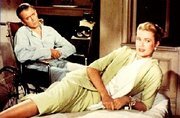
Based on the short story by Cornell Woolrich and with a screenplay written by frequent Hitchcock colaborator John Michael Hayes, the story of Rear Window concerns L. B. Jefferies (James Stewart) a star photographer for a Life Magazine-type publication, who has broken his leg covering a race car accident. Confined to his wheelchair in an era before daytime TV (which I suppose is both a blessing and a curse), Jefferies takes to spying on his neighbours for entertainment. This voyeurism provides the excuse for the adition of various sub-plots played out through the windows and yard space of the other teniants in the complex. These minor stories, including some concering a lonley middle-aged women (Judith Evelyn), a struggeling song writer, an aspiring ballet dancer, a couple of newlyweds, and a sculpter with a hearing aid, provide relef from, and counterpoint too, the films two primary story lines.
Story line number one is the romance, something that was not in Woolrichs origanl story. Jefferies has been dating a beautiful young women of the society set named Lisa Carol Fremont, played by Hitchcocks preferd cool blond of the period Grace Kelly. As surprising as it may seem Jeffries is actully thinking about calling things off with her, or at least fears he may have to, thinking that this prime women of society would be unfit to accompany him on the adventures life to which he has become acustomed. But one should never write off a Hitchcock women, as the determind Miss Fremont is provided with oppertunity to prove herself to her man, while still retaining her individuality as demonstrated in the films last beat.

Lisa Fremonts oppertunity to prove herself comes in the form of a mystery, played out of course in an apartment across the way. Jeffries becomes suspicous that a Mr. Lars Thorwald (a creepy Raymond Burr), has killed his invalid wife so as to be free to run off with a mysterious girlfriend. The murder, while never actully shown is really quite grizzly if you think about it, taking a nearly bed-ridden women, killing her, and then cuting her up into chunks that can be smuggled out of the apartment in a relatively small salesmans briefcase. While he has little actul dialouge in the film, Burr does make a strong impression with bright white hair and a luggish manner. He seems a very real kind of villian, a man driven to desperation by his circumstances who finally flips and does the unthinkable. The moment when he finally eyes Stewart through the window and figures out what has been going on remains quite chiling. His scene with Grace Kelly after he discovers her snooping around his apartment can really get the blood flowing.

The film also stars Wendell Corey as Det. Lt. Thomas J. Doyle, an old war buddy of Jefferies who now works at the police department, he is called in to help the crippled photographer investigate his theorys. Thelma Ritter provides comic relief as the nurse sent by the insurance company to aid the disabled Mr. Jeffries. Rear Window is a classic, oft remarked to be a perfect incapsulation of Hitchcocks style and demonstration of his abilitys. It would be a great first Hitch film for almost anyone, and required viewing for anybody who claims to really appreciate film.
The Da Vinci Code (2006)
8/3/06
Just wanted to quickly put down a few words on The Da Vinci Code, which I have just now finally seen. "Been there done that" comes to mind, I've already encounterd most of the philosophical and conspiratorial elements presented in this work outside of the film, and seeing them presented in the form of an action movie felt kind of silly. It's a good movie in some ways, technicaly & cast wise, kept my attention the whole time, but it really was a rather pretentious formula picture. Maybe I'm writing this to soon after viewing as I can't really say if I liked or disliked the film, I suppose now I'll just have to leave it as a mixed bag. Though my wife, Audrey Tautou, was beautiful as always.
Just wanted to quickly put down a few words on The Da Vinci Code, which I have just now finally seen. "Been there done that" comes to mind, I've already encounterd most of the philosophical and conspiratorial elements presented in this work outside of the film, and seeing them presented in the form of an action movie felt kind of silly. It's a good movie in some ways, technicaly & cast wise, kept my attention the whole time, but it really was a rather pretentious formula picture. Maybe I'm writing this to soon after viewing as I can't really say if I liked or disliked the film, I suppose now I'll just have to leave it as a mixed bag. Though my wife, Audrey Tautou, was beautiful as always.
Scent of a Women (1992)
8/2/06
Scent of a Women is a wonderfull film directed by Martin Brest which itself recived a good deal of critical praise upon release in 1992. The film concerns Frank Slade (Al Pacino in a bravo performance), a retired Lt. Colonel in the Air Force and former member of President Lyndon Johnsons staff. Renderd blind by a gernade accident taken by most of his associates as perfectly representational of his life of carelessness, the 'old man' is farmed out to a neices family in New Hampshire. Charlie Sims (Chris O'Donnell), is a young man of limited means from Oregan, attending a prestigous private school in Franks area on a scholarship. Charlie is hired to 'care' for Frank when his family goes out of town over Thanksgiving weekend. Instead of the quite couple of days that Charlie expected, Frank takes the young man to New York City where he intends to take a final tour through the pleasures of life before killing himself. Charlie learns a number of life lessons from Frank, who (you guessed it) finds a new will to live through his friendship with the young man. You pretty well know the arc of the film by the end of its exposition heavey first half hour, but the journy the story takes really is worth your time. Bradley Whitford, Frances Conroy, and a young Philip Seymour Hoffman all have supporting roles in the picture.
Scent of a Women is a wonderfull film directed by Martin Brest which itself recived a good deal of critical praise upon release in 1992. The film concerns Frank Slade (Al Pacino in a bravo performance), a retired Lt. Colonel in the Air Force and former member of President Lyndon Johnsons staff. Renderd blind by a gernade accident taken by most of his associates as perfectly representational of his life of carelessness, the 'old man' is farmed out to a neices family in New Hampshire. Charlie Sims (Chris O'Donnell), is a young man of limited means from Oregan, attending a prestigous private school in Franks area on a scholarship. Charlie is hired to 'care' for Frank when his family goes out of town over Thanksgiving weekend. Instead of the quite couple of days that Charlie expected, Frank takes the young man to New York City where he intends to take a final tour through the pleasures of life before killing himself. Charlie learns a number of life lessons from Frank, who (you guessed it) finds a new will to live through his friendship with the young man. You pretty well know the arc of the film by the end of its exposition heavey first half hour, but the journy the story takes really is worth your time. Bradley Whitford, Frances Conroy, and a young Philip Seymour Hoffman all have supporting roles in the picture.
Random Harvest (1942)
8/2/06
Well blogspot has decided that I speak Spanish now so I'm writing this without a spellcheck. Just wanted to comment on a couple of movies I saw today, as you may have noticed I've had an awfull lot of time lately for watching films. First off is Random Harvest, based on the best selling book by James Hilton (one of the more popular writers of the 1930's & 40's). This is a very well done semi-tragic love story staring Ronald Colman and Greer Garson in her first post Mrs. Miniver role. Colman is Charles Rainer the heir to a prominent industrial family who loses his memory in the foxholes of World War One. The Germans capture Rainer and return him to the British after the war, however the military is somehow unable to identify him and he ends up in a mental asylum from which he eventully escapes. Rainer comes under the care of Paula Ridgeway (Garson), a music hall entertainer who calls him 'Smithy', takes him in, helps him escape from the authorites, and with whom he eventully falls in love and marrys.
Severl years pass and 'Smithy', on his way to a job interview out of town, is hit by an automobile and regains his previous memory, forgetting everything that has transpired over the last three years. Still more years pass and Charles establishes himself as a captian of industry with a strong sense of compasion. Paula eventully comes across Charles picture in a newspaper and seeks him out hoping to jog his memory, instead she ends up becoming his private secretary. The two souls come to live a tormented existance, Charles plauged by a sense of having lost something of great value from his 'missing years', and Paula by an inability to regain her pervious relationship with Charles. This film offers a well done unconventional love story that was much praised in its time as one of the best 'moving pictures' ever made. Actress Susan Peters plays a supporiting part in the film, she was later paralized in a car accident but managed to continue her career for a number of years there after in a wheel chair.
Well blogspot has decided that I speak Spanish now so I'm writing this without a spellcheck. Just wanted to comment on a couple of movies I saw today, as you may have noticed I've had an awfull lot of time lately for watching films. First off is Random Harvest, based on the best selling book by James Hilton (one of the more popular writers of the 1930's & 40's). This is a very well done semi-tragic love story staring Ronald Colman and Greer Garson in her first post Mrs. Miniver role. Colman is Charles Rainer the heir to a prominent industrial family who loses his memory in the foxholes of World War One. The Germans capture Rainer and return him to the British after the war, however the military is somehow unable to identify him and he ends up in a mental asylum from which he eventully escapes. Rainer comes under the care of Paula Ridgeway (Garson), a music hall entertainer who calls him 'Smithy', takes him in, helps him escape from the authorites, and with whom he eventully falls in love and marrys.
Severl years pass and 'Smithy', on his way to a job interview out of town, is hit by an automobile and regains his previous memory, forgetting everything that has transpired over the last three years. Still more years pass and Charles establishes himself as a captian of industry with a strong sense of compasion. Paula eventully comes across Charles picture in a newspaper and seeks him out hoping to jog his memory, instead she ends up becoming his private secretary. The two souls come to live a tormented existance, Charles plauged by a sense of having lost something of great value from his 'missing years', and Paula by an inability to regain her pervious relationship with Charles. This film offers a well done unconventional love story that was much praised in its time as one of the best 'moving pictures' ever made. Actress Susan Peters plays a supporiting part in the film, she was later paralized in a car accident but managed to continue her career for a number of years there after in a wheel chair.
Me and You and Everyone We Know (2005)
8/1/06
Star Miranda July's directorial debut, Me and You and Everyone We Know, tells a number of interconnected stories about people desperately looking for love, or perhaps more specificly companionship. July (who looks and sounds remarkably like Rachel Griffith) is Christine Jesperson, an aspiring amateur video artist, who works providing transportation services to the elderly. John Hawkes is Richard Swersey, a shoe salesman with two kids (Miles Thompson and Brandon Ratclift) whose wife is divorcing him. The two meet by chance at the department store where Richard works, and while Christine quite quickly decides she'd like to start a new relationship, Richard is having a hard time letting go of his old one. The movie feels like a slightly more upbeat version of Welcome to the Dolls House, or a sort of post modern take on Marty by way of Crash . The secondary plots, which involve Richards children, the young girl next door, an elderly couple, another shoe salesman, two teenage girls, and the director of a local art museum, mostly come together in the end although to differing degrees of effectiveness. However the fine line of tastefulness is so often walked in the film that its intended sense of joy feels a little muted. I didn't feel like the movie quite reached its full promise, though it did get close.
Star Miranda July's directorial debut, Me and You and Everyone We Know, tells a number of interconnected stories about people desperately looking for love, or perhaps more specificly companionship. July (who looks and sounds remarkably like Rachel Griffith) is Christine Jesperson, an aspiring amateur video artist, who works providing transportation services to the elderly. John Hawkes is Richard Swersey, a shoe salesman with two kids (Miles Thompson and Brandon Ratclift) whose wife is divorcing him. The two meet by chance at the department store where Richard works, and while Christine quite quickly decides she'd like to start a new relationship, Richard is having a hard time letting go of his old one. The movie feels like a slightly more upbeat version of Welcome to the Dolls House, or a sort of post modern take on Marty by way of Crash . The secondary plots, which involve Richards children, the young girl next door, an elderly couple, another shoe salesman, two teenage girls, and the director of a local art museum, mostly come together in the end although to differing degrees of effectiveness. However the fine line of tastefulness is so often walked in the film that its intended sense of joy feels a little muted. I didn't feel like the movie quite reached its full promise, though it did get close.
The Squide and the Whale (2005)
8/1/06
Baumbach, an associate of director Wes Anderson, has made a film drawn in part from his own childhood experiences. The Squid and the Whale is a metaphor for the strange and hostel divorce of a pair from the New York literary set. Set in 1986 the film stars Jeff Daniels as Bernard Berkman, a has been novelist and professor of creative writing who is separating from his wife of 17 years Joan Berkman (Laura Linny), herself an author whose own career has just started its rise. Caught in the separation between their pompous and superior father, and well meaning but adulterous mother are Walt (Jesse Eisnberg) and Frank (Owen Kline) Berkman. During the coarse of the divorce both children come to cling to and idealize one of their parents, for Walt that's his 'brilliant' father, for Frank his caring mother. Both children act out in their own ways, with Franks (remember he's about 12) drinking and sexual fixations being particularly disturbing.
The relationship in the film that I found most fascinating however was Bernard and Walt's. I can understand how Walt came to worship the man, his embodiment of a supposedly liberated and cuttingly honest kind of intellectuailsm, holds a strange attraction to certain types of people. Yet despite his pretension, Bernard is by far the needyest and most self obsessed of all the characters in the film, as he tries to mold his oldest son to live the kind of life his bitterness has lead him to wish he'd lived in hindsight. When a young graduate student (Anna Paquin) moves into an empty room at Bernards new home, the mutual attraction father and son share for the girl leads to an odd, uneasy, and unspoken competition between the two, as well as Walt's break up with his girlfriend (Halley Feiffer). The Squid and the Whale does a real good job of putting you into these characters world, and at about 80 minutes runs at a perfect pace.
Baumbach, an associate of director Wes Anderson, has made a film drawn in part from his own childhood experiences. The Squid and the Whale is a metaphor for the strange and hostel divorce of a pair from the New York literary set. Set in 1986 the film stars Jeff Daniels as Bernard Berkman, a has been novelist and professor of creative writing who is separating from his wife of 17 years Joan Berkman (Laura Linny), herself an author whose own career has just started its rise. Caught in the separation between their pompous and superior father, and well meaning but adulterous mother are Walt (Jesse Eisnberg) and Frank (Owen Kline) Berkman. During the coarse of the divorce both children come to cling to and idealize one of their parents, for Walt that's his 'brilliant' father, for Frank his caring mother. Both children act out in their own ways, with Franks (remember he's about 12) drinking and sexual fixations being particularly disturbing.
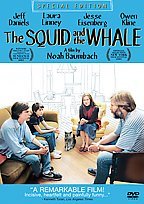
The relationship in the film that I found most fascinating however was Bernard and Walt's. I can understand how Walt came to worship the man, his embodiment of a supposedly liberated and cuttingly honest kind of intellectuailsm, holds a strange attraction to certain types of people. Yet despite his pretension, Bernard is by far the needyest and most self obsessed of all the characters in the film, as he tries to mold his oldest son to live the kind of life his bitterness has lead him to wish he'd lived in hindsight. When a young graduate student (Anna Paquin) moves into an empty room at Bernards new home, the mutual attraction father and son share for the girl leads to an odd, uneasy, and unspoken competition between the two, as well as Walt's break up with his girlfriend (Halley Feiffer). The Squid and the Whale does a real good job of putting you into these characters world, and at about 80 minutes runs at a perfect pace.
Fun With Dick & Jane (2005)
7/31/06
2005's Fun With Dick & Jane is a remake of the 1977 feature staring George Segal and Jane Fonda. The updated version is set in the year 2000 to take advantage of the corporate scandals which provide background and premise for the film. Working couple Dick & Jane Harper, Jim Carry and Tea Leoni, both lose there jobs as a result of false promises and corrupt mismanagement at a major corporation headed by Alec Baldwin. This moderately amusing film chronicles the desperation of the couple as they try to stay afloat economically, eventually resorting to crime. The karma of the film is a little mixed as neither the Harper's or Baldwins character ultimately suffer any long-term consequences for there actions.
2005's Fun With Dick & Jane is a remake of the 1977 feature staring George Segal and Jane Fonda. The updated version is set in the year 2000 to take advantage of the corporate scandals which provide background and premise for the film. Working couple Dick & Jane Harper, Jim Carry and Tea Leoni, both lose there jobs as a result of false promises and corrupt mismanagement at a major corporation headed by Alec Baldwin. This moderately amusing film chronicles the desperation of the couple as they try to stay afloat economically, eventually resorting to crime. The karma of the film is a little mixed as neither the Harper's or Baldwins character ultimately suffer any long-term consequences for there actions.
The New World (2005)
7/30/06
The New World is the latest in director Terrence Malick's infrequent contributions to cinema. I must say that the story of the forbidden love between Pocahontas (Q'Orianka Kilcher) and John Smith (Colin Farrell) was not one which I was overly excited to see on screen, but two glowing recommendations from two very different sources (a guy in my ward and a pagan priestess, I kid you not) prompted me to see the film, and I must say I was impressed. This is a simply beautiful movie in every way, the story, the performances, the music, and the cinematography, the last of which was so gorgeous that I instantly regretted not seeing it on the big screen. The New World breaths new life into its tired old story and offers a vivid depiction of a period of time not often presented on film.
The New World is the latest in director Terrence Malick's infrequent contributions to cinema. I must say that the story of the forbidden love between Pocahontas (Q'Orianka Kilcher) and John Smith (Colin Farrell) was not one which I was overly excited to see on screen, but two glowing recommendations from two very different sources (a guy in my ward and a pagan priestess, I kid you not) prompted me to see the film, and I must say I was impressed. This is a simply beautiful movie in every way, the story, the performances, the music, and the cinematography, the last of which was so gorgeous that I instantly regretted not seeing it on the big screen. The New World breaths new life into its tired old story and offers a vivid depiction of a period of time not often presented on film.
Bob Roberts (1992)
7/30/06
Bob Roberts is a great satire, presented in documentary format it follows the 1990 Senate campaign of businessman/folk singer Robert Roberts. Director/star Tim Robbins does a fantastic job of capturing right-wing demigogery and the disheartening media situation, something that has only gotten more pronounced since the film was made. Alternately funny and disturbing, the movie also boasts a long list of celebrity cameos, mostly playing members of the press. The esteemed liberal author and commentator Gore Vidal plays Roberts Democratic rival, the wise Senator Brickley Paiste of Pennsylvania. Look for a young Jack Black as a Roberts groupie.
Bob Roberts is a great satire, presented in documentary format it follows the 1990 Senate campaign of businessman/folk singer Robert Roberts. Director/star Tim Robbins does a fantastic job of capturing right-wing demigogery and the disheartening media situation, something that has only gotten more pronounced since the film was made. Alternately funny and disturbing, the movie also boasts a long list of celebrity cameos, mostly playing members of the press. The esteemed liberal author and commentator Gore Vidal plays Roberts Democratic rival, the wise Senator Brickley Paiste of Pennsylvania. Look for a young Jack Black as a Roberts groupie.
The Pacifier (2005)
7/29/06
The Pacifier isn't so much unbearable as it is just completely derivative and unfunny. Sort of a poor man's Kindergarten Cop, it features Vin Diesal as a Navy Seal asigned to protect the family of a recently murdered Defense Department analyst. Watching the film you will feel anything from disgust, to a numb neutrality, to a light warmth depending on you susceptibility to Disney sentimentality
The Pacifier isn't so much unbearable as it is just completely derivative and unfunny. Sort of a poor man's Kindergarten Cop, it features Vin Diesal as a Navy Seal asigned to protect the family of a recently murdered Defense Department analyst. Watching the film you will feel anything from disgust, to a numb neutrality, to a light warmth depending on you susceptibility to Disney sentimentality
Raging Bull (1980)
7/28/06
Robert De Niro won an Oscar for his portrayal of middle-weight champion Jake La Motta in Martin Scorsese's violent black & white art film about boxing, Raging Bull. Probably less impressive watching it in 2006 then in 1980 when it was released (largely because we now take De Niro's acting abilities for granted), Raging Bull really dose showcase one of the legendary performances in cinema history and is a film more about internal flaws then outward ability.
Robert De Niro won an Oscar for his portrayal of middle-weight champion Jake La Motta in Martin Scorsese's violent black & white art film about boxing, Raging Bull. Probably less impressive watching it in 2006 then in 1980 when it was released (largely because we now take De Niro's acting abilities for granted), Raging Bull really dose showcase one of the legendary performances in cinema history and is a film more about internal flaws then outward ability.
The Family Stone (2005)
7/28/06
The Family Stone is one of those "meet-the-in-laws", holiday-type comedy's. When Everett Stone (Dermot Mulrony) brings his uptight New York girlfriend Meredith Morton (played by Sarah Jessica Parker, whose supposed attractiveness I've never really understood) to meet his liberal family, mis-adventures ensue. The film starts out a little cold and awkward but gradually warms to likeablity, though never transcends the conventional.
The Family Stone is one of those "meet-the-in-laws", holiday-type comedy's. When Everett Stone (Dermot Mulrony) brings his uptight New York girlfriend Meredith Morton (played by Sarah Jessica Parker, whose supposed attractiveness I've never really understood) to meet his liberal family, mis-adventures ensue. The film starts out a little cold and awkward but gradually warms to likeablity, though never transcends the conventional.
The Contender (2000)
7/26/06
Rod Lurie's 2000 film The Contender served as The American President to the writer/directors own short lived, West Wing style drama Commander & Chief. Chief however was one of those ill-fated television programs whose back story and behind the scenes goings-on where more interesting then the actual show. The Contender has more of a plot then The American President but is a less likeable movie. Perhaps more realistic then Sorkins Capra-like Romance, The Contender offers a hard-edged political procedural in the tradition of Premingers Advise and Consent 40 years earlier, only here I found no characters that I really liked.
The plot of the film concerns two-term Democratic President Jackson Evans (Jeff Bridges) who must fill the vacancy left by the death of the Vice-President (whose name, as a bit of trivia was Troy Ellert), said to have occurred three-weeks prior to the start of events on screen. While the popular sentiment is to appoint the politically well situated but ultimately substancless Governor of Virginia Jack Hathaway (William L. Peterson), the President chooses instead to nominate Senator Laine Hanson (Joan Allen) of Ohio, a far leftist who strangely enough is said to have once been a Republican. Illinois Congressman Sheldon Runyan (Gary Oldman) however wants to use his chairmanship of a committee set to review the nominee, to get payback at the sitting president for some political slight, vaguely refereed to as having occurred in Hartford, that is said to have cost him the presidency. Sam Elliott plays the Presidents chief-of-staff Kermit Newman, and Christian Slater is a promising young Democratic Congressman from Delaware. This is largely a good movie but full of a liberal posturing more arrogant then typically found on The West Wing, and an awkward sort of PC moralism with which I was not ultimately comfortable. I would have had a hard voting for Laine Hanson, but think I would ultimately have to confirm her.
Rod Lurie's 2000 film The Contender served as The American President to the writer/directors own short lived, West Wing style drama Commander & Chief. Chief however was one of those ill-fated television programs whose back story and behind the scenes goings-on where more interesting then the actual show. The Contender has more of a plot then The American President but is a less likeable movie. Perhaps more realistic then Sorkins Capra-like Romance, The Contender offers a hard-edged political procedural in the tradition of Premingers Advise and Consent 40 years earlier, only here I found no characters that I really liked.
The plot of the film concerns two-term Democratic President Jackson Evans (Jeff Bridges) who must fill the vacancy left by the death of the Vice-President (whose name, as a bit of trivia was Troy Ellert), said to have occurred three-weeks prior to the start of events on screen. While the popular sentiment is to appoint the politically well situated but ultimately substancless Governor of Virginia Jack Hathaway (William L. Peterson), the President chooses instead to nominate Senator Laine Hanson (Joan Allen) of Ohio, a far leftist who strangely enough is said to have once been a Republican. Illinois Congressman Sheldon Runyan (Gary Oldman) however wants to use his chairmanship of a committee set to review the nominee, to get payback at the sitting president for some political slight, vaguely refereed to as having occurred in Hartford, that is said to have cost him the presidency. Sam Elliott plays the Presidents chief-of-staff Kermit Newman, and Christian Slater is a promising young Democratic Congressman from Delaware. This is largely a good movie but full of a liberal posturing more arrogant then typically found on The West Wing, and an awkward sort of PC moralism with which I was not ultimately comfortable. I would have had a hard voting for Laine Hanson, but think I would ultimately have to confirm her.
Thank You For Smoking (2005)
7/26/06
Young director Jason Reitman, who got his start in bit child parts in movies such as Kindergarten Cop and Dave, brings to the screen his first mass marketed film, Thank You For Smoking, with a certain juvenile glee. Based on the satiric novel by Christopher Buckley (son of conservative oracle William F. Jr.), Thank You felt too obvious to be truly biting. In actuality this film should have been made 10 years ago when the smoking related issues it addresses were still relevant, the moral story it attempts to communicate is now to generally accepted and obvious to warrant a cinematic treatment.
It is fortunate then that this movie doesn't only focuses its satiric energies on the Tobacco industry, other obvious targets such as the gun and alcoholic beverage lobbies are also lampooned in the form of David Koechner and Maria Bello respectively. Perhaps the films funniest character was Hollywood super-agent Jeff Megall, (played in one of the movies many instances of obvious casting by Rob Lowe), a charming work-aholic and collector of all things Asian, who is perhaps even more "morally flexible" then lead character Nick Naylor (Aaron Eckhart).
Naylor is a much hated lobbyist for a Tobacco industry front group, who is brilliantly performed by Eckhart in a rare staring role. Naylor insures that the films proceedings remain entertaining despite no strong plot. An ill-advised romantic relationship with Kate Holmes reporter Heather Holloway, and a death threat from an anti-tobacco group help provide some narrative thrust, but basically the movie is just Naylor going around doing his job and attempting to maintain a relationship with his 12 year old son (Cameron Bright). William H. Macy, J.K. Simmons, and Robert Duvall all have mostly cartoonish feeling parts in the film, though Sam Elliotts former Marlboro Man character Lorne Lutch has a little more depth then the others.
Thank You For Smoking will entertain you throughout, but I can't really call it a good movie. All flesh and no bones it try's to deliver the sour-milk of satire in a conventional comedy format with a faux-moralistic ending that doesn't really work. You could probably get more out of the material by simply reading Buckley's book.
Young director Jason Reitman, who got his start in bit child parts in movies such as Kindergarten Cop and Dave, brings to the screen his first mass marketed film, Thank You For Smoking, with a certain juvenile glee. Based on the satiric novel by Christopher Buckley (son of conservative oracle William F. Jr.), Thank You felt too obvious to be truly biting. In actuality this film should have been made 10 years ago when the smoking related issues it addresses were still relevant, the moral story it attempts to communicate is now to generally accepted and obvious to warrant a cinematic treatment.
It is fortunate then that this movie doesn't only focuses its satiric energies on the Tobacco industry, other obvious targets such as the gun and alcoholic beverage lobbies are also lampooned in the form of David Koechner and Maria Bello respectively. Perhaps the films funniest character was Hollywood super-agent Jeff Megall, (played in one of the movies many instances of obvious casting by Rob Lowe), a charming work-aholic and collector of all things Asian, who is perhaps even more "morally flexible" then lead character Nick Naylor (Aaron Eckhart).
Naylor is a much hated lobbyist for a Tobacco industry front group, who is brilliantly performed by Eckhart in a rare staring role. Naylor insures that the films proceedings remain entertaining despite no strong plot. An ill-advised romantic relationship with Kate Holmes reporter Heather Holloway, and a death threat from an anti-tobacco group help provide some narrative thrust, but basically the movie is just Naylor going around doing his job and attempting to maintain a relationship with his 12 year old son (Cameron Bright). William H. Macy, J.K. Simmons, and Robert Duvall all have mostly cartoonish feeling parts in the film, though Sam Elliotts former Marlboro Man character Lorne Lutch has a little more depth then the others.
Thank You For Smoking will entertain you throughout, but I can't really call it a good movie. All flesh and no bones it try's to deliver the sour-milk of satire in a conventional comedy format with a faux-moralistic ending that doesn't really work. You could probably get more out of the material by simply reading Buckley's book.
24: Season 4 (2005)
7/25/06
I believe that season 4 of 24 is still held as the programs strongest in terms of ratings. It certainly is engaging and different from its predecessors in several ways. First off the season begins with an almost entirely new cast, though many previously established charters do return to the program by its finall, Kim however (much to the joy of many fans who find her annoying) does not. The season also differs in that there is only one primary villain, Habib Marwan (Arnold Vosloo) a Turkish born terrorist leader who heads a surprisingly secular seeming group of Islamic radicals. The Muslim extremist from season 2 seemed pretty true to our expectations of those groups, whereas season 4's badies have no problems working with non-Muslim mercenaries, having very western relationships with women, and hardly mention their religion. Mostly they just want Americans to butt-out of the affairs of other nations, much like the disillusioned former British intelligence officer who was Season 3's final villain.
Of course being open to other allies was probably essential to this group of terrorists, (and keeping the season intersting) as they had a pretty ambitious agenda for day 4: derail a passenger train, kidnap the Secretary of Defense, meltdown a nuclear powerplant, steal a stealth bomber and use it to shoot down Air Force One (leaving the President in a comma), and steal and launch a nuclear missile from Iowa towards a major American city (and who was surprised it turned out to be Los Angeles).
In terms of new characters I liked the Hellers (William Devine and Kim Raver as his daughter), as well a Paul Rains (James Frain) and Edger (Louis Lombardi). Curtis (Roger Cross) was cool, Erin Driscoll (Alberta Wastson) grew on me, and Gregory Itzins vice-president, and later president Charles Logan was great as one of those characters you almost enjoy being annoyed by. Shohreh Aghdashloo of House of Sand and Fog fame made her terrorist mother character something far above any stereo-type. Also the lovely Mia Kirshner's Mandy (though not really a 'new' character, but developed more here then ever before) has the same voice inflection and dark looks of a young Mary-Louise Parker.
Anyways Season 4 was great, though my heart belongs to the dramatic symmetry of Season 2 (and by extension Sarah Winter). Now I am stuck in that wasteland waiting for the Season 5 DVD release.
I believe that season 4 of 24 is still held as the programs strongest in terms of ratings. It certainly is engaging and different from its predecessors in several ways. First off the season begins with an almost entirely new cast, though many previously established charters do return to the program by its finall, Kim however (much to the joy of many fans who find her annoying) does not. The season also differs in that there is only one primary villain, Habib Marwan (Arnold Vosloo) a Turkish born terrorist leader who heads a surprisingly secular seeming group of Islamic radicals. The Muslim extremist from season 2 seemed pretty true to our expectations of those groups, whereas season 4's badies have no problems working with non-Muslim mercenaries, having very western relationships with women, and hardly mention their religion. Mostly they just want Americans to butt-out of the affairs of other nations, much like the disillusioned former British intelligence officer who was Season 3's final villain.
Of course being open to other allies was probably essential to this group of terrorists, (and keeping the season intersting) as they had a pretty ambitious agenda for day 4: derail a passenger train, kidnap the Secretary of Defense, meltdown a nuclear powerplant, steal a stealth bomber and use it to shoot down Air Force One (leaving the President in a comma), and steal and launch a nuclear missile from Iowa towards a major American city (and who was surprised it turned out to be Los Angeles).
In terms of new characters I liked the Hellers (William Devine and Kim Raver as his daughter), as well a Paul Rains (James Frain) and Edger (Louis Lombardi). Curtis (Roger Cross) was cool, Erin Driscoll (Alberta Wastson) grew on me, and Gregory Itzins vice-president, and later president Charles Logan was great as one of those characters you almost enjoy being annoyed by. Shohreh Aghdashloo of House of Sand and Fog fame made her terrorist mother character something far above any stereo-type. Also the lovely Mia Kirshner's Mandy (though not really a 'new' character, but developed more here then ever before) has the same voice inflection and dark looks of a young Mary-Louise Parker.
Anyways Season 4 was great, though my heart belongs to the dramatic symmetry of Season 2 (and by extension Sarah Winter). Now I am stuck in that wasteland waiting for the Season 5 DVD release.
Six Feet Under: Season 3 (2003)
7/20/06
Season three for Six Feet was a very transitional year for the series, as reinforced by the season promo which features the shows lead characters cavorting about a stylized cliff. While many of the tonal qualities of the series remanded the same the show did go in a different direction in regards to a maturing of the characters both in personal growth and a slight decrease in recklessness, or maybe narrowing of recklessness would be a more accurate phrase. Both stylistic and content wise the show was strong, starting with Nates journey into 'parallel' universes in episode one, the strangely joyous episode four, and the long dark journey of despair Nate takes in the final four episodes.
Claire (Lauren Ambrose) has two romantic relationships this season, one with a non-committal crematory worker and amateur musician, and one with a sexually confused artist. David (Michael C. Hall) and Keith's (Mathew St. Patrick) paring has its ups and downs, complet with visits to a therapist. Ruth befriends Bettina (Kathy Bates), helps her sister (Patrica Clarkson) get off some hard drugs, becomes briefly obsessed with the homes new intern (the brilliantly nerdy Rainn Wilson), and ends up as wife number 7 for geology professor
George Sibley (James Cromwell). Brenda(Rachel Griffiths) losses her father to cancer, wisely limits contact with the rest of her family, and makes real progress in overcoming her self-destructive streak. Rico (Freddy Rodriguez) deals with his wifes depression and nagging sister in-law quite well for some time, but in the final episode of the season makes an unwise choice that will doubtless have major consequences.
It's Nate's arc this season however that is most central and interesting. After surviving his brain operation that was season 2's cliff hanger, he decides to marry the mother of his child Lisa Kimmel (Lili Taylor). At first Nate subsumes himself trying to act out the part of the husband Lisa wants him to be. A dream conversation with his late father (Richard Jenkins) forces Nate to confront the fact that he may have married Lisa for the wrong reasons, and this health obsessed character turns to smoking after he and his wife and daughter move into the apartment over the funeral homes garage, when Lisa quiets her job as vegan cook to eccentric producer Carol Ward (Catherine O'Hara). Eventually Nate can no longer subsume himself to Lisa's demanding expectations and the two start thinking about a separation, but this is put on hold when while inside a Pyramid at Claires art show, they decide to start anew as who they really are rather then who the other expects them to be, which leads to some real progress and what appears to be Nate genuinely falling in love with Lisa. As things finally start to right themselves Lisa goes missing while on a trip to visit her sister, with all these events leading to the seasons tragic ending and Nates spiraling personal decline.
Again as stated in my review for season 2 of Six Feet Under this is an intense, dark and adult show, however also very powerful and rewarding viewing if your primed for it. Now more then half way to the series end its still hard to know what dark yet true things creator Alan Ball and his writing staff are prepared to throw at the viewer.
Season three for Six Feet was a very transitional year for the series, as reinforced by the season promo which features the shows lead characters cavorting about a stylized cliff. While many of the tonal qualities of the series remanded the same the show did go in a different direction in regards to a maturing of the characters both in personal growth and a slight decrease in recklessness, or maybe narrowing of recklessness would be a more accurate phrase. Both stylistic and content wise the show was strong, starting with Nates journey into 'parallel' universes in episode one, the strangely joyous episode four, and the long dark journey of despair Nate takes in the final four episodes.
Claire (Lauren Ambrose) has two romantic relationships this season, one with a non-committal crematory worker and amateur musician, and one with a sexually confused artist. David (Michael C. Hall) and Keith's (Mathew St. Patrick) paring has its ups and downs, complet with visits to a therapist. Ruth befriends Bettina (Kathy Bates), helps her sister (Patrica Clarkson) get off some hard drugs, becomes briefly obsessed with the homes new intern (the brilliantly nerdy Rainn Wilson), and ends up as wife number 7 for geology professor
George Sibley (James Cromwell). Brenda(Rachel Griffiths) losses her father to cancer, wisely limits contact with the rest of her family, and makes real progress in overcoming her self-destructive streak. Rico (Freddy Rodriguez) deals with his wifes depression and nagging sister in-law quite well for some time, but in the final episode of the season makes an unwise choice that will doubtless have major consequences.
It's Nate's arc this season however that is most central and interesting. After surviving his brain operation that was season 2's cliff hanger, he decides to marry the mother of his child Lisa Kimmel (Lili Taylor). At first Nate subsumes himself trying to act out the part of the husband Lisa wants him to be. A dream conversation with his late father (Richard Jenkins) forces Nate to confront the fact that he may have married Lisa for the wrong reasons, and this health obsessed character turns to smoking after he and his wife and daughter move into the apartment over the funeral homes garage, when Lisa quiets her job as vegan cook to eccentric producer Carol Ward (Catherine O'Hara). Eventually Nate can no longer subsume himself to Lisa's demanding expectations and the two start thinking about a separation, but this is put on hold when while inside a Pyramid at Claires art show, they decide to start anew as who they really are rather then who the other expects them to be, which leads to some real progress and what appears to be Nate genuinely falling in love with Lisa. As things finally start to right themselves Lisa goes missing while on a trip to visit her sister, with all these events leading to the seasons tragic ending and Nates spiraling personal decline.
Again as stated in my review for season 2 of Six Feet Under this is an intense, dark and adult show, however also very powerful and rewarding viewing if your primed for it. Now more then half way to the series end its still hard to know what dark yet true things creator Alan Ball and his writing staff are prepared to throw at the viewer.
Waiting for God: Season 1 (1990)
7/20/06
My first britcom and still my favorite is Waiting for God, which once ran ubiquitously on our local PBS affiliate in the mid-to-late 90's, has finally had its complete first season released on one DVD. Created by Michael Aitkens (who was only in his forties at the time), the show is set at the Bayside Retirement Village whose inmates, I mean residents spend their golden years waiting to meet their maker. Tom Ballard (Graham Crowden) is a retired accountant whose boring life has left him prone to flights of fantasy. When Tom's notoriously dull son Geoffrey (Andrew Tourell) at the bidding of his shrewish wife Marion (Sandra Payne), decides to check his father into the retirement community into which they have invested, the 'old man' is unhappily resigned to his fate. That is until he meets Diana Trent (Stephanie Cole), a former photo-journalist and his neighbor at Bayview who is a decided cynic and just lives to torment the community's cheap-skate administrator Harvey Baines (Daniel Hill) and his sweet natured, plan faced assistant Jane Edwards (Janine Duvitski). Full of reflections on death, God, and what it means to be old, Waiting for God is a rather philosophical sitcom that treats 'the aged' with both humor and dignity.
My first britcom and still my favorite is Waiting for God, which once ran ubiquitously on our local PBS affiliate in the mid-to-late 90's, has finally had its complete first season released on one DVD. Created by Michael Aitkens (who was only in his forties at the time), the show is set at the Bayside Retirement Village whose inmates, I mean residents spend their golden years waiting to meet their maker. Tom Ballard (Graham Crowden) is a retired accountant whose boring life has left him prone to flights of fantasy. When Tom's notoriously dull son Geoffrey (Andrew Tourell) at the bidding of his shrewish wife Marion (Sandra Payne), decides to check his father into the retirement community into which they have invested, the 'old man' is unhappily resigned to his fate. That is until he meets Diana Trent (Stephanie Cole), a former photo-journalist and his neighbor at Bayview who is a decided cynic and just lives to torment the community's cheap-skate administrator Harvey Baines (Daniel Hill) and his sweet natured, plan faced assistant Jane Edwards (Janine Duvitski). Full of reflections on death, God, and what it means to be old, Waiting for God is a rather philosophical sitcom that treats 'the aged' with both humor and dignity.
Mona Lisa Smile (2003)
7/19/06
Mona Lisa Smile is one of those inspiring teacher movies whose most distinguishing surface feature is that it is set at an all-girls university (as opposed to the all boys prep schools generally favored by this genre). While most easily though of as a Julie Roberts vehicle, it is in fact the cast of young Hollywood starlets (including Kirsten Dunst, Julia Stiles, Maggie Gyllenhall, and Ginnifer Goodwin) who actually make the picture work.
Set during the 1953-1954 academic year at Boston areas Wellesley College, the story concerns Katherine Ann Watson (Julia Roberts), a California 'bohemian' sort who has come to the conservative school to teach an art history course. Though greeted at first with disdain to indifference by all but a few of her students and co-workers, you know that by the end of the year she has won over, or at the very lest impressed, the whole campus.
Though my description my sound a little trite this is acutely an enjoyable movie, that fights the cultural battles of the 1950's with healthy ambiguity. The four primary young women characters are treated with some complexity, and issues of expectation and individualism are fairly addressed, with no pat answer provided other then that one must ultimately chose ones own path, what ever that may be. Though the social order of the time must play as nostalgia for most modern American audiences, Mormons viewers may find the cultural dynamic in the film to be more relevant to there experiences and thusly hit closer to home. The whole thing could easily be remade and set at present day BYU-Idaho. The film also features Topher Grace, John Slattery, Marcia Gay Harden, and Dominic West as Ms. Roberts love interest.
Mona Lisa Smile is one of those inspiring teacher movies whose most distinguishing surface feature is that it is set at an all-girls university (as opposed to the all boys prep schools generally favored by this genre). While most easily though of as a Julie Roberts vehicle, it is in fact the cast of young Hollywood starlets (including Kirsten Dunst, Julia Stiles, Maggie Gyllenhall, and Ginnifer Goodwin) who actually make the picture work.
Set during the 1953-1954 academic year at Boston areas Wellesley College, the story concerns Katherine Ann Watson (Julia Roberts), a California 'bohemian' sort who has come to the conservative school to teach an art history course. Though greeted at first with disdain to indifference by all but a few of her students and co-workers, you know that by the end of the year she has won over, or at the very lest impressed, the whole campus.
Though my description my sound a little trite this is acutely an enjoyable movie, that fights the cultural battles of the 1950's with healthy ambiguity. The four primary young women characters are treated with some complexity, and issues of expectation and individualism are fairly addressed, with no pat answer provided other then that one must ultimately chose ones own path, what ever that may be. Though the social order of the time must play as nostalgia for most modern American audiences, Mormons viewers may find the cultural dynamic in the film to be more relevant to there experiences and thusly hit closer to home. The whole thing could easily be remade and set at present day BYU-Idaho. The film also features Topher Grace, John Slattery, Marcia Gay Harden, and Dominic West as Ms. Roberts love interest.
The League of Extraordinary Gentlemen (2003)
7/18/06
For my birthday my brother and sister-in-law got me a DVD of The League of Extraordinary Gentlemen, a movie which a number of people (perhaps surprisingly) have been telling me to see for years. I however remember the bad reviews the movie got and wasn't expecting much going in, which is probably why I found the film mildly entertaining, a popcorn movie in the old B-picture tradition.
Basically this is a kind of late Victorian X-men. Sean Connery is legendary game hunter/adventurer Allan Quartermain, who is brought out of 'retirement' in Africa to head up a group of 'extraordinary individuals' known as 'The League of Extraordinary Gentlemen'. Basically 'the League' is composed of comic book versions of famous literary characters such as Dorian Gray, Tom Sawyer, The Invisible Man, Captain Nemo, and Dr. Jekyll/Mr. Hyde. They are tasked with preventing a mysterious figure known as 'The Phantom' from starting a world war so that he can profit on the sale of advanced weaponry. The film is sort of rambling and often feels directionless, it takes about half an hour to assemble the team, and then they all spend a strangely long period of time on board 'The Nautilus' reflecting on their pasts and their personal faults. By the time we get to their destination of Venice about fifty minutes have passed, and for what turns out to be something of a red hearing, we do however get to see half of the city sink into the ocean.
If you treat it as the bit of lite adventure it is you can enjoy movie, though strangely I think that its some what broding first half was its strongest. League is an odd cinematic swan-song for Sean Connery, who recently announced his retirement from film.
For my birthday my brother and sister-in-law got me a DVD of The League of Extraordinary Gentlemen, a movie which a number of people (perhaps surprisingly) have been telling me to see for years. I however remember the bad reviews the movie got and wasn't expecting much going in, which is probably why I found the film mildly entertaining, a popcorn movie in the old B-picture tradition.
Basically this is a kind of late Victorian X-men. Sean Connery is legendary game hunter/adventurer Allan Quartermain, who is brought out of 'retirement' in Africa to head up a group of 'extraordinary individuals' known as 'The League of Extraordinary Gentlemen'. Basically 'the League' is composed of comic book versions of famous literary characters such as Dorian Gray, Tom Sawyer, The Invisible Man, Captain Nemo, and Dr. Jekyll/Mr. Hyde. They are tasked with preventing a mysterious figure known as 'The Phantom' from starting a world war so that he can profit on the sale of advanced weaponry. The film is sort of rambling and often feels directionless, it takes about half an hour to assemble the team, and then they all spend a strangely long period of time on board 'The Nautilus' reflecting on their pasts and their personal faults. By the time we get to their destination of Venice about fifty minutes have passed, and for what turns out to be something of a red hearing, we do however get to see half of the city sink into the ocean.
If you treat it as the bit of lite adventure it is you can enjoy movie, though strangely I think that its some what broding first half was its strongest. League is an odd cinematic swan-song for Sean Connery, who recently announced his retirement from film.
Exodus (1960)
7/12/06
Exodus, based on the best selling book by Leon Uris, is Otto Premingers epic spectical on the establishment of the state of Israel. Intermixing real with fictitious characters the movie is probably not the best history lesson you could have the subject, and its portrayal of events has been harshly critiqued over the years. With a running time of approximately 3 1/2 hours, and a pacing that isn't in a hurry to get any where, sitting through this feature might feel as though it takes longer then some Israeli wars.
The plot concerns Kitty Fremont (Eva Marie Saint) the widow of photo-journalist who died covering Jewish uprisings in Palestine in the immediate post World War II years. Kitty has traveled to Cyprus to visit General Sutherland (Ralph Richardson) a British army officer who had been a friend of her late husbands. While there the General asks Mrs. Freemont (who happens to be a trained nurse) if she wouldn't mind spending a few days helping out at a refugee camp for Jews. The British Navy had been intercepting ships attempting to carry European Jews to Palestine, the reasoning being that the surge in Jewish population in the area was making it difficult for the imperial forces there to keep the peace with the Arabs. While volunteering at the camp Kitty befriends a teenage girl named Karen (Jill Haworth) whose mother and siblings died in the holocaust and whose father has been missing for years. Kitty eventually decides to (with the Generals permission) take Karen to America with her in the hopes of adopting the girl.
Kittys happy plans are disrupted however when Ari Ben Canaan (Paul Newman) arrives on the island to help implement a secret plan to transport the refuges who had been intercepted aboard a ship called 'The Star of David' (of which Karen is of course one) get to Palestine. Dressed as a military officer and carrying forged orders Ben Canaan manages to get the 'Star of David' passengers onto a new boat, which he calls 'Exodus'. The British figure out what he is up to before the boat can leave harbor and blockade the ship. In response the folks aboard 'Exodus' go on a hunger strike until they are permitted to leave for Palestine, promising to blow up the boat if the British try to board it. Eventually the U.K. decides to cave in to their demands and the ship sets out on its journey, with Kitty Fremont permitted to stay on board as ships nurse after their doctor dies of a heart attack brought on by the heat.
Once they all make it to the holy land the plot shifts to the search for Karens father, who she believes might have made it to Palestine in the after-math of the war. Eventually Karens father is found alive in a hospital, but so mentally and physically ravaged by his experiences that he can not even talk, let alone respond to his daughters presence. Karens story is not however the central focus of the movie, rather star Paul Newmans Ben Cannan character is. We see Ari struggle to reconcile the militant and non-violent camps of Zionism, help orchestrate an elaborate Great Escape style prison break, and defend the residents of the small Jewish settlement he calls home from Arabs in the wake of the U.N. granting of Israeli partition.
As I said before this movie is pretty long, it could be several movies, and while well executed I'd have to rank it in the bottom half (favorites wise) of the Preminger films I've seen. Ernest Golds score for the movie constituted the films only Academy Award win.
Exodus, based on the best selling book by Leon Uris, is Otto Premingers epic spectical on the establishment of the state of Israel. Intermixing real with fictitious characters the movie is probably not the best history lesson you could have the subject, and its portrayal of events has been harshly critiqued over the years. With a running time of approximately 3 1/2 hours, and a pacing that isn't in a hurry to get any where, sitting through this feature might feel as though it takes longer then some Israeli wars.
The plot concerns Kitty Fremont (Eva Marie Saint) the widow of photo-journalist who died covering Jewish uprisings in Palestine in the immediate post World War II years. Kitty has traveled to Cyprus to visit General Sutherland (Ralph Richardson) a British army officer who had been a friend of her late husbands. While there the General asks Mrs. Freemont (who happens to be a trained nurse) if she wouldn't mind spending a few days helping out at a refugee camp for Jews. The British Navy had been intercepting ships attempting to carry European Jews to Palestine, the reasoning being that the surge in Jewish population in the area was making it difficult for the imperial forces there to keep the peace with the Arabs. While volunteering at the camp Kitty befriends a teenage girl named Karen (Jill Haworth) whose mother and siblings died in the holocaust and whose father has been missing for years. Kitty eventually decides to (with the Generals permission) take Karen to America with her in the hopes of adopting the girl.
Kittys happy plans are disrupted however when Ari Ben Canaan (Paul Newman) arrives on the island to help implement a secret plan to transport the refuges who had been intercepted aboard a ship called 'The Star of David' (of which Karen is of course one) get to Palestine. Dressed as a military officer and carrying forged orders Ben Canaan manages to get the 'Star of David' passengers onto a new boat, which he calls 'Exodus'. The British figure out what he is up to before the boat can leave harbor and blockade the ship. In response the folks aboard 'Exodus' go on a hunger strike until they are permitted to leave for Palestine, promising to blow up the boat if the British try to board it. Eventually the U.K. decides to cave in to their demands and the ship sets out on its journey, with Kitty Fremont permitted to stay on board as ships nurse after their doctor dies of a heart attack brought on by the heat.
Once they all make it to the holy land the plot shifts to the search for Karens father, who she believes might have made it to Palestine in the after-math of the war. Eventually Karens father is found alive in a hospital, but so mentally and physically ravaged by his experiences that he can not even talk, let alone respond to his daughters presence. Karens story is not however the central focus of the movie, rather star Paul Newmans Ben Cannan character is. We see Ari struggle to reconcile the militant and non-violent camps of Zionism, help orchestrate an elaborate Great Escape style prison break, and defend the residents of the small Jewish settlement he calls home from Arabs in the wake of the U.N. granting of Israeli partition.
As I said before this movie is pretty long, it could be several movies, and while well executed I'd have to rank it in the bottom half (favorites wise) of the Preminger films I've seen. Ernest Golds score for the movie constituted the films only Academy Award win.
An Inconvenient Truth (2006)
7/11/06
A number of years ago I read a biography of Al Gore that stated the then Senator had hopes of turning his book Earth in the Balance into a documentary mini-series along the lines of Carl Sagan's Cosmos. Since Gore ended up running for, and of course winning election to the office of vice-president in 1992, his documentary plans were not realized, that is until recently.
According to The Nation the film An Inconvenient Truth, which is based on Gore's oft presented global warming slide show, was not initiated by him. No it was the film makers, including director Davis Guggenheim (a vetrine of several episodes of the Fox show 24), that came to Gore.
An Inconvenient Truth is an engaging documentary that revels Gore to be both an excellent teacher, and not the wooden cartoon he is often viewed as. The film does delve into elements of Gore's personal and professional life including, his childhood, the near death of his six year old son in 1989, the death of his older sister from lung cancer, and his defeat in the famously disputed presidential election of 2000. The focus of the movie however is on global warming, and Mr. Gore's case is overwhelming, this is no 'Manbearpig' phenomena. Through a glossy multi-media presentation (including a Futurerama clip), the former vice-president brings the satistical and photo-graphic evidence for our planets increased warming scarily to life, calling for a re-birth of 'political will' to address this issue while its effects are still relatively manageable.
Many have commented that this film appears to be part of an attempt by Gore to 'test the waters' for a possible presidential run in 2008. While the films start will dispute this, the more I think about it the better the prospect of another Gore campaign, and indeed a Gore presidency seems. Al Gore is, in my opinion, probably the best option for the country two years from now. This movie is only part of my gradual conversion to Gore fandom, something I'd like to see spread among others. If honestly addressed the issue of global warming could be faced, and even largely resolved by our generation, and possibly even serve a step towards a greater sense of unity of purpose in our land. So see An Inconvenient Truth and start thinking of a running-mate, I'm cerial.
A number of years ago I read a biography of Al Gore that stated the then Senator had hopes of turning his book Earth in the Balance into a documentary mini-series along the lines of Carl Sagan's Cosmos. Since Gore ended up running for, and of course winning election to the office of vice-president in 1992, his documentary plans were not realized, that is until recently.
According to The Nation the film An Inconvenient Truth, which is based on Gore's oft presented global warming slide show, was not initiated by him. No it was the film makers, including director Davis Guggenheim (a vetrine of several episodes of the Fox show 24), that came to Gore.
An Inconvenient Truth is an engaging documentary that revels Gore to be both an excellent teacher, and not the wooden cartoon he is often viewed as. The film does delve into elements of Gore's personal and professional life including, his childhood, the near death of his six year old son in 1989, the death of his older sister from lung cancer, and his defeat in the famously disputed presidential election of 2000. The focus of the movie however is on global warming, and Mr. Gore's case is overwhelming, this is no 'Manbearpig' phenomena. Through a glossy multi-media presentation (including a Futurerama clip), the former vice-president brings the satistical and photo-graphic evidence for our planets increased warming scarily to life, calling for a re-birth of 'political will' to address this issue while its effects are still relatively manageable.
Many have commented that this film appears to be part of an attempt by Gore to 'test the waters' for a possible presidential run in 2008. While the films start will dispute this, the more I think about it the better the prospect of another Gore campaign, and indeed a Gore presidency seems. Al Gore is, in my opinion, probably the best option for the country two years from now. This movie is only part of my gradual conversion to Gore fandom, something I'd like to see spread among others. If honestly addressed the issue of global warming could be faced, and even largely resolved by our generation, and possibly even serve a step towards a greater sense of unity of purpose in our land. So see An Inconvenient Truth and start thinking of a running-mate, I'm cerial.
The Life of Emile Zola (1937)
7/11/06
The best picture Oscar winner for 1937, The Life of Emile Zola is the movie that inspired the Laurie Holden character in Frank Darabont's The Majestic to become a lawyer. While Zola himself was never a lawyer he was a crusader for justice, a muckraking author in 19th century France, he was one of the best loved and most hated men of his time. Played in the film by Paul Muni, who won an oscar for his performance, Zola is the type of dedicated eccentric who makes for great entertainment (and could easily serve as the basis for a TV detective).
The first half hour of the film contains a severely abridged biography of Zola over about a 30 year period, the rest of the film (which runs just under two hours), is dedicated to the famous Dreyfus affiar. The Dreyfus affair is an incident in which honest and hardworking Capt. Alfred Dreyfus (Joseph Schildkraut) was used as a scapegoat for a massive intelligence leak in the French armys general staff, presumably just because he was Jewish. A few years after Dreyfus had been sent to languish on 'Devils Island' the Army chief of intelligence came upon new evidence that cleared the captain and identified the real culprit. However fearing the damage this revelation might inflict upon the reputation of the general staff, and the glory of the army, the officer to uncover this information ( I think he was played by Henry O'Neil) was silenced and the real offender cleared.
Zola who by the time of these events was an old man, was at first reluctantly drug into Dreyfus defense by the convicts wife (Gale Sondergaard). Emile however would eventually became such a champion of the wrongly accused officer that he would allow himself to go on trail for 'publicly liabling' the general staff, in order to clear his name. Zola would eventually face prison time for his actions, but fled into exile in England (despite a strong distaste for any cold climate) where he continued to lobby for Dreyfus through his writings, something which ultamilty proved successful. The court room scenes in this drama are stirring and Muni expertly delivers a couple great Zola monologues. A largely forgotten (for a best picture winner) classic film about a largely forgotten great man, this movie is certenly worth seeing. The films message about the dangers of overly secretive military justice, and the damages that can be done when any organization thinks it can do no wrong, couldn't be more timely. Zola's wife is played here by Gloria Holden, an actress best known for playing Draculas daughter in the movie of the same name.
The best picture Oscar winner for 1937, The Life of Emile Zola is the movie that inspired the Laurie Holden character in Frank Darabont's The Majestic to become a lawyer. While Zola himself was never a lawyer he was a crusader for justice, a muckraking author in 19th century France, he was one of the best loved and most hated men of his time. Played in the film by Paul Muni, who won an oscar for his performance, Zola is the type of dedicated eccentric who makes for great entertainment (and could easily serve as the basis for a TV detective).
The first half hour of the film contains a severely abridged biography of Zola over about a 30 year period, the rest of the film (which runs just under two hours), is dedicated to the famous Dreyfus affiar. The Dreyfus affair is an incident in which honest and hardworking Capt. Alfred Dreyfus (Joseph Schildkraut) was used as a scapegoat for a massive intelligence leak in the French armys general staff, presumably just because he was Jewish. A few years after Dreyfus had been sent to languish on 'Devils Island' the Army chief of intelligence came upon new evidence that cleared the captain and identified the real culprit. However fearing the damage this revelation might inflict upon the reputation of the general staff, and the glory of the army, the officer to uncover this information ( I think he was played by Henry O'Neil) was silenced and the real offender cleared.
Zola who by the time of these events was an old man, was at first reluctantly drug into Dreyfus defense by the convicts wife (Gale Sondergaard). Emile however would eventually became such a champion of the wrongly accused officer that he would allow himself to go on trail for 'publicly liabling' the general staff, in order to clear his name. Zola would eventually face prison time for his actions, but fled into exile in England (despite a strong distaste for any cold climate) where he continued to lobby for Dreyfus through his writings, something which ultamilty proved successful. The court room scenes in this drama are stirring and Muni expertly delivers a couple great Zola monologues. A largely forgotten (for a best picture winner) classic film about a largely forgotten great man, this movie is certenly worth seeing. The films message about the dangers of overly secretive military justice, and the damages that can be done when any organization thinks it can do no wrong, couldn't be more timely. Zola's wife is played here by Gloria Holden, an actress best known for playing Draculas daughter in the movie of the same name.
Love Actually (2003)
7/9/06
A friend of mine once described the movie Love Actually to me as Crash if it were a romantic comedy. I'd be hard pressed to provide a better little description of the film, everything else I can think of to describe it sounds like, well, blurbs of praise you'd put on the poster or DVD box. Love Actually is quite simply a joyous film, a celebration of all things love. There are about nine major stories going on throughout and you skip back and forth between them and over time see how many of them connect. There is so much going on in the film that I'm not even going to try and cover it, instead I refer you to this wikipedia entry, that is if you don't mind spoilers. But better yet just see the film and enjoy, it is deservidly rated R so know that going in, but the emotional core of the film as reveled in a roughly 35 minute end sequence set on Christmas eve is well worth it.
A friend of mine once described the movie Love Actually to me as Crash if it were a romantic comedy. I'd be hard pressed to provide a better little description of the film, everything else I can think of to describe it sounds like, well, blurbs of praise you'd put on the poster or DVD box. Love Actually is quite simply a joyous film, a celebration of all things love. There are about nine major stories going on throughout and you skip back and forth between them and over time see how many of them connect. There is so much going on in the film that I'm not even going to try and cover it, instead I refer you to this wikipedia entry, that is if you don't mind spoilers. But better yet just see the film and enjoy, it is deservidly rated R so know that going in, but the emotional core of the film as reveled in a roughly 35 minute end sequence set on Christmas eve is well worth it.
Eulogy (2004)
7/6/06
The Dredge family reunion is this weekend and I will be unable to attend, however I do have Eulogy to act as my substitute. Acutely compared with the Collins clan from this 2004 film, my extended family seems relatively normal, no lesbians or drug addicts there that I know of. Eulogy concerns the gathering together of a large and disfunctional family for the funeral of there patriarch Edmund (Rip Torn, seen as a corpse, in flashbacks, and in a video will). There are other movies built around this same sort of concept, and it seems that the creative powers that be thought that if they brought enough quirky characters together the thing would write its self. It is a fair picture for the first hour and then comes together in a satisfying (and of course quirky) way at the end, when Edmund's big secret is reveled.
Eulogy does have the virtue of containing one of the greatest casts of second teer celebrities ever assembled in one film. The anchoring character is Kate Collins, played by the lovely Zooey Deschanel, she is also one of the sanest figures in the movie. Jesse Bradford (who had an enjoyable extended guest shot on the 5th season of West Wing) plays Ryan Carmichael, Kate's childhood best friend and potential love interest. Hank Azaria is Kate's father Daniel, he is perhaps the most normal of the Edmunds progeny, a one time childhood spoaksperson for a peanut butter company now reduced to playing the non-sexual roles in porn movies. The great Piper Laurie is the suicidal widow Charlotte, Debra Winger her controlling oldest daughter, and Kelly Preston her youngest. Ray Romano plays the other son, Skip who is a barely competent lawyer raising twin delinquent boys Fred and Ted (Curtis and Keith Garcia). Also featured are Glenne Headly, Famke Janssen, Rance Howard, and Rene Auberjonois as the family parson who doesn't seem to really know anything about the family. This movie rates probably about 2 1/2 stars and is one you see primarily for the cast, be warned however this family comedy is hardly appropriate family viewing.
The Dredge family reunion is this weekend and I will be unable to attend, however I do have Eulogy to act as my substitute. Acutely compared with the Collins clan from this 2004 film, my extended family seems relatively normal, no lesbians or drug addicts there that I know of. Eulogy concerns the gathering together of a large and disfunctional family for the funeral of there patriarch Edmund (Rip Torn, seen as a corpse, in flashbacks, and in a video will). There are other movies built around this same sort of concept, and it seems that the creative powers that be thought that if they brought enough quirky characters together the thing would write its self. It is a fair picture for the first hour and then comes together in a satisfying (and of course quirky) way at the end, when Edmund's big secret is reveled.
Eulogy does have the virtue of containing one of the greatest casts of second teer celebrities ever assembled in one film. The anchoring character is Kate Collins, played by the lovely Zooey Deschanel, she is also one of the sanest figures in the movie. Jesse Bradford (who had an enjoyable extended guest shot on the 5th season of West Wing) plays Ryan Carmichael, Kate's childhood best friend and potential love interest. Hank Azaria is Kate's father Daniel, he is perhaps the most normal of the Edmunds progeny, a one time childhood spoaksperson for a peanut butter company now reduced to playing the non-sexual roles in porn movies. The great Piper Laurie is the suicidal widow Charlotte, Debra Winger her controlling oldest daughter, and Kelly Preston her youngest. Ray Romano plays the other son, Skip who is a barely competent lawyer raising twin delinquent boys Fred and Ted (Curtis and Keith Garcia). Also featured are Glenne Headly, Famke Janssen, Rance Howard, and Rene Auberjonois as the family parson who doesn't seem to really know anything about the family. This movie rates probably about 2 1/2 stars and is one you see primarily for the cast, be warned however this family comedy is hardly appropriate family viewing.
The Prairire Home Companion (2006)
7/6/06
Stylistically in the Altman realm while at the same time quite true to its source material, A Prairie Home Companion is doubtlessly one of the more unusual mass-market releases of 2006. A movie adaptation of something you might at first think unfilmable, Prairie brings to the screen Garrison Kellers long running public radio series within a semi-fictitious context. The premise of the movie is that the elderly couple who have long produced 'Prairie Home Companion' are retiring and have sold out to a large Texas corporation, which is sending its representative (Tommy Lee Jones as a born-again 'Axeman') up to Minnesota to shut down the program, and turn its base of operations (the historic Fitzgerald Theater) into a parking lot.
The action of the movie takes place just before and during the broadcast of what is likely to be the final episode of APHC, alternating between what's 'on the air' and various goings on back stage, there is also a brief less then five minute long epilogue to the film that takes place several years later. Like a highly scaled back and condensed version of Altmans Nashville the film follows a group of about 10 central characters most of which are played by big-name stars. Keillor plays himself in the film and many of the radio shows regulars also appear as themselves, including Tom Keith the programs trademark sound effects guy. Lily Tomlin and Meryl Streep play Rhonda and Yolanda Johnson, sisters who are all thats left of a 'Carter family'-type musical group. Lindsy Lohan plays Yolanda's death-obsesed daughter Lola. John C. Reilly and Woody Harrelson are Lefty and Dusty, two cowboy singers who enjoy slightly risquey lyrics. Maya Rudolph from SNL is a pregnet production assistant named Molly, and Virginia Madsen is a deceased former fan of the show who has returned as an 'angel of death' to claim the life of elderly singer Chuck Akers (L. Q. Jones). Kevin Kline plays the radio programs 'Guy Noir' character as a real person, forced to give up detecting (due to lack of clients) and serve as head of security for the program.This movie is slow and not for everyone, if you don't like Kellers radio program then watching this movie would only put you through 105 minutes of hell. I however did like, if not love the picture, and left the theater feeling quite reflective. A Prairie Home Companion is a reflection on death, both literal and figurative, and is one of the most melancholy films made in years.
Stylistically in the Altman realm while at the same time quite true to its source material, A Prairie Home Companion is doubtlessly one of the more unusual mass-market releases of 2006. A movie adaptation of something you might at first think unfilmable, Prairie brings to the screen Garrison Kellers long running public radio series within a semi-fictitious context. The premise of the movie is that the elderly couple who have long produced 'Prairie Home Companion' are retiring and have sold out to a large Texas corporation, which is sending its representative (Tommy Lee Jones as a born-again 'Axeman') up to Minnesota to shut down the program, and turn its base of operations (the historic Fitzgerald Theater) into a parking lot.
The action of the movie takes place just before and during the broadcast of what is likely to be the final episode of APHC, alternating between what's 'on the air' and various goings on back stage, there is also a brief less then five minute long epilogue to the film that takes place several years later. Like a highly scaled back and condensed version of Altmans Nashville the film follows a group of about 10 central characters most of which are played by big-name stars. Keillor plays himself in the film and many of the radio shows regulars also appear as themselves, including Tom Keith the programs trademark sound effects guy. Lily Tomlin and Meryl Streep play Rhonda and Yolanda Johnson, sisters who are all thats left of a 'Carter family'-type musical group. Lindsy Lohan plays Yolanda's death-obsesed daughter Lola. John C. Reilly and Woody Harrelson are Lefty and Dusty, two cowboy singers who enjoy slightly risquey lyrics. Maya Rudolph from SNL is a pregnet production assistant named Molly, and Virginia Madsen is a deceased former fan of the show who has returned as an 'angel of death' to claim the life of elderly singer Chuck Akers (L. Q. Jones). Kevin Kline plays the radio programs 'Guy Noir' character as a real person, forced to give up detecting (due to lack of clients) and serve as head of security for the program.This movie is slow and not for everyone, if you don't like Kellers radio program then watching this movie would only put you through 105 minutes of hell. I however did like, if not love the picture, and left the theater feeling quite reflective. A Prairie Home Companion is a reflection on death, both literal and figurative, and is one of the most melancholy films made in years.
Gilmore Girls: Season 2 (2001-2002)
7/6/06
"Oy with the poodle's already", last night I finished Gilmore Girls season two. What more can I say about the program that I haven't said about the first season, its just a really enjoyable show, richly developed, witty, full of likeable characters, and totaly enveloping. The first disc or so pretty much wraps up the major lose strings from last season, most notable of which is Lorelai's (Lauren Graham) brief engagement to Rory's (Alexis Bledel) teacher Max Medina (Scott Cohen). The narrative thrust of this season is largely focused on Lukes troubled nephew Jess Mariano (Milo Ventimiglia) and a well handled love triangle that develops between him Rory and Dean (Jared Padalecki). This is also the season of the Edward Herrmann characters brief retirement and return to the business world as an insurance consultant. Gilmore Girls season 2 builds well on the first and has me excited about the third.
"Oy with the poodle's already", last night I finished Gilmore Girls season two. What more can I say about the program that I haven't said about the first season, its just a really enjoyable show, richly developed, witty, full of likeable characters, and totaly enveloping. The first disc or so pretty much wraps up the major lose strings from last season, most notable of which is Lorelai's (Lauren Graham) brief engagement to Rory's (Alexis Bledel) teacher Max Medina (Scott Cohen). The narrative thrust of this season is largely focused on Lukes troubled nephew Jess Mariano (Milo Ventimiglia) and a well handled love triangle that develops between him Rory and Dean (Jared Padalecki). This is also the season of the Edward Herrmann characters brief retirement and return to the business world as an insurance consultant. Gilmore Girls season 2 builds well on the first and has me excited about the third.
The Life and Death of Colonel Blimp (1943)
7/2/06
The Life and Death of Colonel Blimp is based (apparently quite loosely) on the cartoons of David Low, and chronicles the 40+ year military career of officer Clive Candy. Roger Livesey gives a strong endearing performance as the career officer, aided by one of the most convincing make-up jobs of character aging I've ever seen in a film, from any period. Life and Death was the first Technicolor spectacle from the production team of Michael Powell and Emeric Pressburger (here after known as P&P), a writing and directing partnership that the New Yorker magazine has accurately described as "purveyors of high kitsch". While in form the film might seem an odd composite of the comic and mellowdramatic, it's acutely quite a moving story that explores a large tapestry of themes including aging, love, friendship, ethics & warfair, as well as the long and complicated history of German/English relations. Anton Walbrook plays Clives old friend Theo Kretschmar-Schuldorff, a German character who is incredibly nuanced for one found in a World War Two era film. Deborah Kerr (a P&P favorite) plays three roles in the film, all expressions of Clives ideal female type. Presented in P&P's fanciful style Colonel Blimp is The Red Shoes for men.
The Life and Death of Colonel Blimp is based (apparently quite loosely) on the cartoons of David Low, and chronicles the 40+ year military career of officer Clive Candy. Roger Livesey gives a strong endearing performance as the career officer, aided by one of the most convincing make-up jobs of character aging I've ever seen in a film, from any period. Life and Death was the first Technicolor spectacle from the production team of Michael Powell and Emeric Pressburger (here after known as P&P), a writing and directing partnership that the New Yorker magazine has accurately described as "purveyors of high kitsch". While in form the film might seem an odd composite of the comic and mellowdramatic, it's acutely quite a moving story that explores a large tapestry of themes including aging, love, friendship, ethics & warfair, as well as the long and complicated history of German/English relations. Anton Walbrook plays Clives old friend Theo Kretschmar-Schuldorff, a German character who is incredibly nuanced for one found in a World War Two era film. Deborah Kerr (a P&P favorite) plays three roles in the film, all expressions of Clives ideal female type. Presented in P&P's fanciful style Colonel Blimp is The Red Shoes for men.

The Big One (1997), Michael Moore Hates America (2004)
7/2/06
Michael Moore is one of the most polarizing figures in America today, in fact he's right up there with the president. This weekend I took a look at Moore from two different perspectives, his own, and that of a surprisingly good tempered critic named Michael Wilson. I watched two documentaries, Moores own The Big One, and Wilsons Michael Moore Hates America.
The Big One was the last of Moores feature length documentaries that I had yet to see, it is also very representative of his work and style containing his trademark populist activism, satirical humor, and own narrative centrality to his films. The Big One chronicles Moores 1996 book tour for his New York Times best seller Down Size This, as well as the aftermath of events initated there-in. Moore hops around the country cheering a surprising number of down trodden Americans and confronting powerful figures and corporations from Leaf Candies, to Wisconsin Governor Tommy Thompson, to Nike chairman Phil Knight (one of the few executives ever willing to face Mr. Moore on camera). He laments a corporate America that in its 90's heyday was making record profits and downsizing blue collar works across the country. Moore has always been good at projecting an empathy towards people who find themselves trapped in his version of Edwards America, and despite his often being characterized as a near monster by some I think he truly is sincere. In the mostly pro-Moore film This Divided State Michael is also seen as very loving to those with whom he shares common cause, but capable of being caustic and dismissive towards those with whom he disagrees (though I'd still rather spend time with him then Sean Hannity). This all brings me to that other side of Michael Moore and the other documentary here in review.
Michael Moore Hates America is a 2004 film by young director Michael Wilson, who like Moore hails form the American mid-west. The title is meant to be ironic, a commentary on how vitriolic the political debate has become in this country. It is doubtful that Wilson ever thought that Moore really hated America, he just has some political disagreements with him that seem to flow from a libertarian perspective. In fact Wilson honors Moore by copying his style, though he is not as confrontational as, and seemingly more laid back then, 'the man from Flint'. Speaking of Flint, in the course of his film Wilson is able to confirm that Moore in fact did not grow up in that town which was once named the worst city in America, But rather was raised and attended school in the neighboring, and more prosperous suburb of Davison Michigan. Wilson does visit Flint and finds its a town in slow recovery, with members of the community expresseing a hopeful optimism and people starting to move back into town. The director/host does however go to pains to show things in an honest manner, admitting and apologizing on tape for several instances in which he was deceptive in landing interviews or gaining footage, perhaps realizing how easy it can be to become manipulative within the 'Moore' documentary format. Luckily he had Penn Jillette to keep him honest.
Michael Moore Hates America is essentially a follow up on many of the claims and persons presented in Moores documentary features, including Bowling for Columbine and Fahrenheit 911. It also contains a Roger & Me like quest, ultimately unsuccessful, to land an interview with Moore, an endeavor that casts the liberal film maker in the role of the 'detached bigwig' that he frequently derides. The film is also interspersed with interviews with various talking heads ranging from What's So Great About America author Dinesh D'Souza, to former congressman J. C. Watts of Oklahoma, to the well respected documentary film maker Albert Maysles (who utters one of the funniest lines in the film). The only major fault with the film I can think of is the long distance psycho-analysis of Mr. Moore offered by some lawyer, he may be correct but it would have sounded better coming from someone with real credentials in that field.
In terms of a summation of my thoughts about Mr. Moore, I must again re-state that I think he is a sincere and compassionate guy, but also one of those people who can easily justify being manipulative if he thinks he's right. Michael Moore Hates America does a good job of exposing several instances of Michaels selective editing, but Fahrenhype 911 provides a more complete picture of his techniques in regards to the mans most famous picture, although that film has its own quite obvious political agenda. While Wilson is of course trying to prove a point, it is Moore who is truly manipulative (though not particularly so in The Big One, as opposed to his later work), and I think it is his strong tendency towards deceptive editing that is the mans great sin.
Michael Moore is one of the most polarizing figures in America today, in fact he's right up there with the president. This weekend I took a look at Moore from two different perspectives, his own, and that of a surprisingly good tempered critic named Michael Wilson. I watched two documentaries, Moores own The Big One, and Wilsons Michael Moore Hates America.
The Big One was the last of Moores feature length documentaries that I had yet to see, it is also very representative of his work and style containing his trademark populist activism, satirical humor, and own narrative centrality to his films. The Big One chronicles Moores 1996 book tour for his New York Times best seller Down Size This, as well as the aftermath of events initated there-in. Moore hops around the country cheering a surprising number of down trodden Americans and confronting powerful figures and corporations from Leaf Candies, to Wisconsin Governor Tommy Thompson, to Nike chairman Phil Knight (one of the few executives ever willing to face Mr. Moore on camera). He laments a corporate America that in its 90's heyday was making record profits and downsizing blue collar works across the country. Moore has always been good at projecting an empathy towards people who find themselves trapped in his version of Edwards America, and despite his often being characterized as a near monster by some I think he truly is sincere. In the mostly pro-Moore film This Divided State Michael is also seen as very loving to those with whom he shares common cause, but capable of being caustic and dismissive towards those with whom he disagrees (though I'd still rather spend time with him then Sean Hannity). This all brings me to that other side of Michael Moore and the other documentary here in review.
Michael Moore Hates America is a 2004 film by young director Michael Wilson, who like Moore hails form the American mid-west. The title is meant to be ironic, a commentary on how vitriolic the political debate has become in this country. It is doubtful that Wilson ever thought that Moore really hated America, he just has some political disagreements with him that seem to flow from a libertarian perspective. In fact Wilson honors Moore by copying his style, though he is not as confrontational as, and seemingly more laid back then, 'the man from Flint'. Speaking of Flint, in the course of his film Wilson is able to confirm that Moore in fact did not grow up in that town which was once named the worst city in America, But rather was raised and attended school in the neighboring, and more prosperous suburb of Davison Michigan. Wilson does visit Flint and finds its a town in slow recovery, with members of the community expresseing a hopeful optimism and people starting to move back into town. The director/host does however go to pains to show things in an honest manner, admitting and apologizing on tape for several instances in which he was deceptive in landing interviews or gaining footage, perhaps realizing how easy it can be to become manipulative within the 'Moore' documentary format. Luckily he had Penn Jillette to keep him honest.

Michael Moore Hates America is essentially a follow up on many of the claims and persons presented in Moores documentary features, including Bowling for Columbine and Fahrenheit 911. It also contains a Roger & Me like quest, ultimately unsuccessful, to land an interview with Moore, an endeavor that casts the liberal film maker in the role of the 'detached bigwig' that he frequently derides. The film is also interspersed with interviews with various talking heads ranging from What's So Great About America author Dinesh D'Souza, to former congressman J. C. Watts of Oklahoma, to the well respected documentary film maker Albert Maysles (who utters one of the funniest lines in the film). The only major fault with the film I can think of is the long distance psycho-analysis of Mr. Moore offered by some lawyer, he may be correct but it would have sounded better coming from someone with real credentials in that field.

In terms of a summation of my thoughts about Mr. Moore, I must again re-state that I think he is a sincere and compassionate guy, but also one of those people who can easily justify being manipulative if he thinks he's right. Michael Moore Hates America does a good job of exposing several instances of Michaels selective editing, but Fahrenhype 911 provides a more complete picture of his techniques in regards to the mans most famous picture, although that film has its own quite obvious political agenda. While Wilson is of course trying to prove a point, it is Moore who is truly manipulative (though not particularly so in The Big One, as opposed to his later work), and I think it is his strong tendency towards deceptive editing that is the mans great sin.
Friday, June 29, 2007
The Prestige (2006)
Tuesday, June 26, 2007
Summers Lease (1989)
6/24/06
From the novel by John Mortimer (of Rumpole of the Bailey fame) comes the late 80's BBC mini-series Summers Lease. Part travel log, part domestic drama, and part mystery, Summers Lease is the story of an eventfully August that the Pargeter family spends on vacation in a Tuscan villa. Amid touring, marital problems between Molly (Susan Fleetwood) and her boring husband Hugh (Michael Pennington), and the efforts of Mrs. Pargeters libidinous father Haverford Downs (a very spry 85 year-old John Gielgud) at rekindling a thirty years past relationship with a wealthy widow (Rosemary Leach), the wife and mother finds herself stumbling upon a nefarious plot. The mystery involves the villas absentee owners the Ketterings, and corruption at the local water authority. There is much wit and intrigue in this somewhat quirky yet very grounded production which also boasts a memorable theme by Nigel Hess. Mostley however it just adds to my jealousy of fictional characters who can afford to spend a month abroad. Gielguds performance as the aging magazine columnist (Jottings which he writes for 'The Informer') and died-in-the-wool socialist Haverford is what makes the whole thing truly memorable. Those familiar with Gielguds personal life will find the discussion on homosexual artists toward the end of the piece rather amusing.
From the novel by John Mortimer (of Rumpole of the Bailey fame) comes the late 80's BBC mini-series Summers Lease. Part travel log, part domestic drama, and part mystery, Summers Lease is the story of an eventfully August that the Pargeter family spends on vacation in a Tuscan villa. Amid touring, marital problems between Molly (Susan Fleetwood) and her boring husband Hugh (Michael Pennington), and the efforts of Mrs. Pargeters libidinous father Haverford Downs (a very spry 85 year-old John Gielgud) at rekindling a thirty years past relationship with a wealthy widow (Rosemary Leach), the wife and mother finds herself stumbling upon a nefarious plot. The mystery involves the villas absentee owners the Ketterings, and corruption at the local water authority. There is much wit and intrigue in this somewhat quirky yet very grounded production which also boasts a memorable theme by Nigel Hess. Mostley however it just adds to my jealousy of fictional characters who can afford to spend a month abroad. Gielguds performance as the aging magazine columnist (Jottings which he writes for 'The Informer') and died-in-the-wool socialist Haverford is what makes the whole thing truly memorable. Those familiar with Gielguds personal life will find the discussion on homosexual artists toward the end of the piece rather amusing.
Backstairs at the White House (1979)
6/24/06
From the golden age of the mini-series came Ed Friendly's production of Backstairs at the White House, a sort of epic sitting room drama based on the memories of Lillian Rogers Parks. In 1909 Lillians mother Maggie (Olivia Cole), separated from her alcoholic husband and trying to raise her polio stricken daughter and rambunctious young son, took a position in the White House domestic staff as a maid and hair stylist, a job that would come to dominate her family's lives. In time Lillian (Leslie Uggams) would come to work at the White House too as a seamstress and maid, while brother Emmett would be gased in World War One and spend most of his life in Arizona 'recovering'. The Rogers story and those of many of the staff are quite endearing, indeed it is the personal narrative that gives this production its continuity and much of its heart. However its the 'backstairs' look at the private lives of eight first family's that provides the hook for most viewers.
Backstairs view of the presidency is mostly romantic, though some first family's come of better then others, often not the ones you might expect. I found myself really liking the Tafts and while one could rightly argue they were in over there heads, they never the less seem like quality people. Nellie Taft (Julie Harris) was a bit of perfectionist, and the true force behind her husbands political aspirations, yet some one whom you can readily understand. President Taft (Victor Buono) was a jovial, and surprisingly humble fat man who really loved his wife and wanted to do well by his country, while never really enjoying the presidency. The Wilsons, whom I've been fans of since watching a mid-40's bio-pic of the man, come off less well then the Tafts. It takes a while for the White House staff to warm up to this old school master (Robert Vaughn) and the two wives he had in office. The first was Mrs. Ellen Wilson (Kim Hunter) who was truley a rock to her husband, one on which he so depended that he rather quickly remarried after her passing. The second Mrs. Wilson (Claire Bloom) was a surprising strong women, whom many accuse of essentially running the country after her husbands stroke in 1919.
When the Wilsons left in came the Hardings. Warren Harding (George Kennedy) is now considered to be one of the most notoriously corrupt presidents in our nations history, though while he was in office he was near universally beloved. Mrs. Florence Harding (Celeste Holm) was the kind of First Lady spirituallist we now associate with Nancy Reagan, as well as being some what dotty and slyly knowing of her husbands indiscretions. When president Harding died while on a cross country train trip, Mrs. Harding stayed in mourning in the White House for a couple of weeks before the Coolidges moved in. Grace Coolidge (Lee Grant) is considered in some circles to have been the perfect model of a first lady, and I've long thought that Mr. Coolidge (Ed Flanders) could have handled a major crises had one occurred during his tenure in office. The Coolidges are probably my favorite first family depicted in the series, they are out of Lynch with their eccentricitys, weird seemingly contradictory traits, and the truth of their emotions.
The Hoovers however where cold toward the staff (especially Mr. Hoover played by Larry Gates), and often acted detached from what was going on in the country, as witness their constant elaborite entertaning of guests. Mrs. Lou Hoover (Jan Sterling) even took to communicating with the staff largely through 'short-hand' hand gestures. The Roosevelts (John Anderson and Eileen Heckart) where saintly idealists out of a screwball comedy or George Kaufman play. They where followed by the down to earth Trumans, with Bess played by Estelle Parsons and Harry Morgan as the obvious casting choice for the president. Andrew Duggans president Eisenhower was kind enough if emotionally distant from the staff, while Barbara Barrie's Mamie Eisenhower was kind of nuts. Some Elders I served around on my mission briefly taught a former member of Mamie Eisenhowers White House staff, and apparently he said she was a drunk, I wouldn't doubt it.
Backstairs at the White House also stars Louis Gossett Jr., Leslie Nielsen, and Cloris Leachman as members of the White House staff. This was a truly enjoyable mini-series, and though it sounds a little corny I really was sad when it ended.
From the golden age of the mini-series came Ed Friendly's production of Backstairs at the White House, a sort of epic sitting room drama based on the memories of Lillian Rogers Parks. In 1909 Lillians mother Maggie (Olivia Cole), separated from her alcoholic husband and trying to raise her polio stricken daughter and rambunctious young son, took a position in the White House domestic staff as a maid and hair stylist, a job that would come to dominate her family's lives. In time Lillian (Leslie Uggams) would come to work at the White House too as a seamstress and maid, while brother Emmett would be gased in World War One and spend most of his life in Arizona 'recovering'. The Rogers story and those of many of the staff are quite endearing, indeed it is the personal narrative that gives this production its continuity and much of its heart. However its the 'backstairs' look at the private lives of eight first family's that provides the hook for most viewers.
Backstairs view of the presidency is mostly romantic, though some first family's come of better then others, often not the ones you might expect. I found myself really liking the Tafts and while one could rightly argue they were in over there heads, they never the less seem like quality people. Nellie Taft (Julie Harris) was a bit of perfectionist, and the true force behind her husbands political aspirations, yet some one whom you can readily understand. President Taft (Victor Buono) was a jovial, and surprisingly humble fat man who really loved his wife and wanted to do well by his country, while never really enjoying the presidency. The Wilsons, whom I've been fans of since watching a mid-40's bio-pic of the man, come off less well then the Tafts. It takes a while for the White House staff to warm up to this old school master (Robert Vaughn) and the two wives he had in office. The first was Mrs. Ellen Wilson (Kim Hunter) who was truley a rock to her husband, one on which he so depended that he rather quickly remarried after her passing. The second Mrs. Wilson (Claire Bloom) was a surprising strong women, whom many accuse of essentially running the country after her husbands stroke in 1919.

When the Wilsons left in came the Hardings. Warren Harding (George Kennedy) is now considered to be one of the most notoriously corrupt presidents in our nations history, though while he was in office he was near universally beloved. Mrs. Florence Harding (Celeste Holm) was the kind of First Lady spirituallist we now associate with Nancy Reagan, as well as being some what dotty and slyly knowing of her husbands indiscretions. When president Harding died while on a cross country train trip, Mrs. Harding stayed in mourning in the White House for a couple of weeks before the Coolidges moved in. Grace Coolidge (Lee Grant) is considered in some circles to have been the perfect model of a first lady, and I've long thought that Mr. Coolidge (Ed Flanders) could have handled a major crises had one occurred during his tenure in office. The Coolidges are probably my favorite first family depicted in the series, they are out of Lynch with their eccentricitys, weird seemingly contradictory traits, and the truth of their emotions.
The Hoovers however where cold toward the staff (especially Mr. Hoover played by Larry Gates), and often acted detached from what was going on in the country, as witness their constant elaborite entertaning of guests. Mrs. Lou Hoover (Jan Sterling) even took to communicating with the staff largely through 'short-hand' hand gestures. The Roosevelts (John Anderson and Eileen Heckart) where saintly idealists out of a screwball comedy or George Kaufman play. They where followed by the down to earth Trumans, with Bess played by Estelle Parsons and Harry Morgan as the obvious casting choice for the president. Andrew Duggans president Eisenhower was kind enough if emotionally distant from the staff, while Barbara Barrie's Mamie Eisenhower was kind of nuts. Some Elders I served around on my mission briefly taught a former member of Mamie Eisenhowers White House staff, and apparently he said she was a drunk, I wouldn't doubt it.
Backstairs at the White House also stars Louis Gossett Jr., Leslie Nielsen, and Cloris Leachman as members of the White House staff. This was a truly enjoyable mini-series, and though it sounds a little corny I really was sad when it ended.
Marlene Dietrich: Her Own Song (2001)
6/20/06
More then her acting and singing careers, or even her admirable service entertaining Allied troops during World War Two, the aspect of the life of Marlene Dietrich that generalyl commands the most attention is her much discussed romantic exploits. While French actor Jean Gabin is perhaps her most well known lover, she is rumored to have been "intament" with a string 20th Century celebritys running the spectrum from General George S. Patton to actress Greta Garbo. It is this tablody conception of her life that receives some counterbalance from the documentary Marlene Dietrich: Her Own Song, which focuses not on her romances or career, but her role in, and relationship to her native German culture. The daughter of a Prussian military officer Dietrich maintained her family discipline while simultaneously breaking with Germanic tradition in her unconvertible life style, and opposition to Nazism even in the movements early years in power. Far from a complete picture of its intriguing subjects life, Marlene Dietrich: Her Own Song at least provides the service of bringing to light some of her more nobel, but increasingly forgotten qualities.
More then her acting and singing careers, or even her admirable service entertaining Allied troops during World War Two, the aspect of the life of Marlene Dietrich that generalyl commands the most attention is her much discussed romantic exploits. While French actor Jean Gabin is perhaps her most well known lover, she is rumored to have been "intament" with a string 20th Century celebritys running the spectrum from General George S. Patton to actress Greta Garbo. It is this tablody conception of her life that receives some counterbalance from the documentary Marlene Dietrich: Her Own Song, which focuses not on her romances or career, but her role in, and relationship to her native German culture. The daughter of a Prussian military officer Dietrich maintained her family discipline while simultaneously breaking with Germanic tradition in her unconvertible life style, and opposition to Nazism even in the movements early years in power. Far from a complete picture of its intriguing subjects life, Marlene Dietrich: Her Own Song at least provides the service of bringing to light some of her more nobel, but increasingly forgotten qualities.
The Exterminating Angel (1962)
6/16/06
So last Night Mia Farrow was guest programming on TCM, and selected the 1962 Mexican film The Exterminating Angel by director Luis Bunuel. When Farrow said that there was no other film out there like this, it peaked my interest and I decided to watch. The movie is a surrealist drama, or as I've decided to dub it, an existential horror movie, about roughly twenty guests at a dinner party who discover that they are unable to leave the room. Nothings physically blocking them, there is no forcefield or anything, but when anyone tires to leave they find they just can't bring themselves to pass the threshold. The same thing is going on on the outside, with no able to get themselves to go up to the door. Those in the room end up being stuck there for some time, and the film focuses on their physical and psychological decay, as well as the rooms for that matter. Quite interesting and worth seeing, runs about an hour and forty minutes.
So last Night Mia Farrow was guest programming on TCM, and selected the 1962 Mexican film The Exterminating Angel by director Luis Bunuel. When Farrow said that there was no other film out there like this, it peaked my interest and I decided to watch. The movie is a surrealist drama, or as I've decided to dub it, an existential horror movie, about roughly twenty guests at a dinner party who discover that they are unable to leave the room. Nothings physically blocking them, there is no forcefield or anything, but when anyone tires to leave they find they just can't bring themselves to pass the threshold. The same thing is going on on the outside, with no able to get themselves to go up to the door. Those in the room end up being stuck there for some time, and the film focuses on their physical and psychological decay, as well as the rooms for that matter. Quite interesting and worth seeing, runs about an hour and forty minutes.
Wallace & Gromit in the Curse of the Were-Rabbit (2005)
6/15/06
After several attempts to get an audio post to work that contains a few brief comments on the movie Wallace & Gromit in the Curse of the Were-Rabbit, I've decided to give up and simply type a few lines myself. Anyway, Were-Rabbit has some funny moments, especially the bunnies and the bunny vacuum, but as a feature it has a hard time sustaining itself. The early Wallace and Gromit shorts worked largely because of there fast pace and roughly half-hour running times. The movie version has about a half-hours worth of gags to it that are just run to long. The rest is that slower British comedy that just doesn't translate great to animation. This is for children and hard-core fans.
(Note: My audio commentary reviews of several films, can not easily be included on this blog so I am forgoing them. I might list there titles at a later time.)
After several attempts to get an audio post to work that contains a few brief comments on the movie Wallace & Gromit in the Curse of the Were-Rabbit, I've decided to give up and simply type a few lines myself. Anyway, Were-Rabbit has some funny moments, especially the bunnies and the bunny vacuum, but as a feature it has a hard time sustaining itself. The early Wallace and Gromit shorts worked largely because of there fast pace and roughly half-hour running times. The movie version has about a half-hours worth of gags to it that are just run to long. The rest is that slower British comedy that just doesn't translate great to animation. This is for children and hard-core fans.
(Note: My audio commentary reviews of several films, can not easily be included on this blog so I am forgoing them. I might list there titles at a later time.)
Batman Begins (2005)
6/13/06
Director Christopher Nolans surprisingly grounded re-imaging of the dark knight in Batman Begins, is preciously what the franchise needed. More realistic and honest then any previous cinematic offering of the capped crusader, Batman Begins is pretty smart for a summer superhero movie. Though it spends it first hour re-hashing back story, its done in a fairly satisfying way, in fact when you think about it we've never really been given a lot of Batman back story in a movie. Most of what I know of Bruce Waynes youthful saga comes from the above par 1990's animated version, to which Begins bares more tonal resemblance then to the other Batman films. The picture boasts an impressive cast, though none of them are really stretching any acting muscles. I liked this Batman, and think there's a lot of potential in a sequel.
Director Christopher Nolans surprisingly grounded re-imaging of the dark knight in Batman Begins, is preciously what the franchise needed. More realistic and honest then any previous cinematic offering of the capped crusader, Batman Begins is pretty smart for a summer superhero movie. Though it spends it first hour re-hashing back story, its done in a fairly satisfying way, in fact when you think about it we've never really been given a lot of Batman back story in a movie. Most of what I know of Bruce Waynes youthful saga comes from the above par 1990's animated version, to which Begins bares more tonal resemblance then to the other Batman films. The picture boasts an impressive cast, though none of them are really stretching any acting muscles. I liked this Batman, and think there's a lot of potential in a sequel.
Imitation of Life (1934), Imitation of Life (1959)
6/8/06
Universals two-sided DVD release of both film adaptations of Fannie Hursts novel Imitation of Life, provides a great opportunity to compare and contrast times and styles for the 'picturization' of a work of literature. The novel itself is the story of two single mothers, one white, one black, their friendship, and the sacrifices they made for their daughters. From what I can gather from both films the novel was probably quite progressive for its time, though some elements would now doubtless seem retrograde.The 1934 version of the film is my favorite of the two, it was truer to the novel and lacked some of the harshness of the 59 version. In this first film adaptation (directed by John M. Stahl), the never disappointing Claudette Colbert is Beatrice 'Bea' Pullman, recently widowed from a husband who had been picked by her father, she is just barely scraping by peddling the maple syrup her late spouse sold. Louise Beavers is Delilah Johnson, a stereotypical 'Mammy' figure who shows up at Bea's backdoor, having misread the address for a job interview. Though she can't really afford it, Bea takes Delilah and her very light skinned daughter Peola, in to live with her and her daughter Jessie.
Eventually Bea is able to take Delilah's pancake recipe and use it to launch a restaurant, and later with the help of a derelict/entrepreneur named Elmer Smith (Ned Sparks, who I now believe is who David Lynch was doing an impression of in his characterization of Gordon Cole for the Twin Peaks TV series), create a successful corporation that boxes the mix. While I'm very impressed with some of the issues that the film delt with in 1934, certain elements are so out dated as to make one uncomfortable. For example in true 'mammy style', even when the success of her pancake mix entitles Delilah to a small fortune, she prefers to stay on living with 'Ms. Bea'. Of course I could go on for some time talking about the ways in which this Imitation is a racial through back, and designed to minimize the potential discomfort of a white audience, but still considering its time it was a step forward, and still and effective story.
The 1959 version was director Douglas Sirks last Hollywood film. Sirk, who had risen from semi-obscurity to name recognition with a series of lavish technicolor romances, is working with a highly altered version of the story that fits in that category. There are many repeated elements, and some repeated scenes, but the course of action is all together different from the original. This time Lana Turner is Lora Meredith, and Juanita Moore plays Annie Johnson as a good deal less of a charactcher then Beavers Delilah. Here the set up is similar, but Lora is an aspiring New York actress who eventually makes it big, and Annie is less responsible for her success.
Of course both films largely focus on the daughters stories in their second halfs. Jessie/Susie falls in love with the one man who truly sets 'their' mothers heart on fire, in both cases his name is Steven Archer, but both films 'resolve' the situation differently. In the 34' version Steven is an Ichtiologist, played by the theatrical looking Warren William. In the 1959 adaptation Steven (John Gavin) is a fustrated photographer turned advertising executive.
The plot involving Mrs. Johnsons daughter has to do with her light skin, and a desire from earliest childhood to be 'white'. In both versions she is capable of "passing" to use the parlance of the times, and fustrated whenever her mother gives her away by showing up at an inopportune time. In Sirks version Sarah Jane, as she is called, is played for sex appeal by the 'developed' Susan Kohner, in 34' she is a morose Fredi Washington and slightly more likeable. The Johnson girl gets her big scene at the end in both pictures, its perhaps the most memorable moment of each but seems less believable and more out of nowhere in its second rendering.
Both Imitations of Life of are good, but if you have to pick just one see the original. For a good introduction to Douglas Sirks work see All That Heaven Allows.
Universals two-sided DVD release of both film adaptations of Fannie Hursts novel Imitation of Life, provides a great opportunity to compare and contrast times and styles for the 'picturization' of a work of literature. The novel itself is the story of two single mothers, one white, one black, their friendship, and the sacrifices they made for their daughters. From what I can gather from both films the novel was probably quite progressive for its time, though some elements would now doubtless seem retrograde.The 1934 version of the film is my favorite of the two, it was truer to the novel and lacked some of the harshness of the 59 version. In this first film adaptation (directed by John M. Stahl), the never disappointing Claudette Colbert is Beatrice 'Bea' Pullman, recently widowed from a husband who had been picked by her father, she is just barely scraping by peddling the maple syrup her late spouse sold. Louise Beavers is Delilah Johnson, a stereotypical 'Mammy' figure who shows up at Bea's backdoor, having misread the address for a job interview. Though she can't really afford it, Bea takes Delilah and her very light skinned daughter Peola, in to live with her and her daughter Jessie.
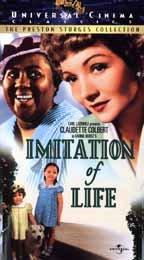
Eventually Bea is able to take Delilah's pancake recipe and use it to launch a restaurant, and later with the help of a derelict/entrepreneur named Elmer Smith (Ned Sparks, who I now believe is who David Lynch was doing an impression of in his characterization of Gordon Cole for the Twin Peaks TV series), create a successful corporation that boxes the mix. While I'm very impressed with some of the issues that the film delt with in 1934, certain elements are so out dated as to make one uncomfortable. For example in true 'mammy style', even when the success of her pancake mix entitles Delilah to a small fortune, she prefers to stay on living with 'Ms. Bea'. Of course I could go on for some time talking about the ways in which this Imitation is a racial through back, and designed to minimize the potential discomfort of a white audience, but still considering its time it was a step forward, and still and effective story.
The 1959 version was director Douglas Sirks last Hollywood film. Sirk, who had risen from semi-obscurity to name recognition with a series of lavish technicolor romances, is working with a highly altered version of the story that fits in that category. There are many repeated elements, and some repeated scenes, but the course of action is all together different from the original. This time Lana Turner is Lora Meredith, and Juanita Moore plays Annie Johnson as a good deal less of a charactcher then Beavers Delilah. Here the set up is similar, but Lora is an aspiring New York actress who eventually makes it big, and Annie is less responsible for her success.
Of course both films largely focus on the daughters stories in their second halfs. Jessie/Susie falls in love with the one man who truly sets 'their' mothers heart on fire, in both cases his name is Steven Archer, but both films 'resolve' the situation differently. In the 34' version Steven is an Ichtiologist, played by the theatrical looking Warren William. In the 1959 adaptation Steven (John Gavin) is a fustrated photographer turned advertising executive.
The plot involving Mrs. Johnsons daughter has to do with her light skin, and a desire from earliest childhood to be 'white'. In both versions she is capable of "passing" to use the parlance of the times, and fustrated whenever her mother gives her away by showing up at an inopportune time. In Sirks version Sarah Jane, as she is called, is played for sex appeal by the 'developed' Susan Kohner, in 34' she is a morose Fredi Washington and slightly more likeable. The Johnson girl gets her big scene at the end in both pictures, its perhaps the most memorable moment of each but seems less believable and more out of nowhere in its second rendering.
Both Imitations of Life of are good, but if you have to pick just one see the original. For a good introduction to Douglas Sirks work see All That Heaven Allows.
Subscribe to:
Posts (Atom)